Balancing Carbohydrates: Best Low-Carb Cat Foods (2026)
“Low carb” is not a regulated pet-food claim. We show how to estimate carbs from labels, compare five real high-protein wet and dry recipes, and keep diabetic or therapeutic feeding in the vet’s lane.

In this review 13 sections
CatsLuvUs Copilot Search
Ask this review — not the open web
Answers are generated from this Cats Luv Us review only. We may earn a commission from Amazon links. Not veterinary advice.
Answer from this review
This score is editorial — based on labels, recall history, and veterinary guidance, not a lab test. How we evaluated.
Start with wet meat-in-broth recipes, then add a truly binder-light dry only if you need kibble. Our default stack is Tiki Cat After Dark Chicken or Weruva Frick ’A Zee for everyday low estimated carbs, plus Dr. Elsey’s cleanprotein when dry is non-negotiable. Treat Instinct Ultimate Protein and Born Carnivore as high-protein kibbles with real starch binders—not as ultra-low-carb trophies. Diabetic or therapeutic feeding belongs with your veterinarian, not an Amazon cart.
Quick picks — low-carb-leaning cat foods
How we ranked these foods
This is a label and literature roundup (research_basis=labels). The Cats Luv Us Team compared manufacturer ingredient decks and guaranteed analyses, estimated residual carbs with the standard NFE method, checked Cornell and AAHA-style diabetes feeding context, and verified Amazon titles/images through the Creators API. We did not run boarding-hotel feeding trials, invent prices or recall dates, or paste competitor/Copilot prose.
- Prefer wet meat-in-broth when carbs are the priority.
- Estimate carbs — do not trust “low carb” front-of-pack alone.
- Separate high protein from low carb — tapioca and peas still count.
- Send medical cases to the vet — diabetes is not a DIY Amazon project.
What “low carb” actually means on a cat food label
“Low carbohydrate” is not a regulated AAFCO nutrient claim the way “complete and balanced” adequacy statements are. Most U.S. bags still omit carbohydrate percentage from the guaranteed analysis. AAFCO’s Pet Food Label Modernization work is pushing clearer carbohydrate and total dietary fiber disclosure, but shoppers still need math today.
Cats are obligate carnivores. They can digest some starch, and healthy cats on complete dry diets are common—but when the goal is carb control (weight management discussions, veterinary diabetic plans, or simply preferring prey-like macros), wet meat recipes usually win because they skip the binders kibble needs to hold a shape.
How to estimate carbs (dry-matter basis)
1) From the guaranteed analysis, add crude protein + crude fat + crude fiber + moisture + ash. 2) Subtract that sum from 100 — the leftover is approximate carbohydrate (nitrogen-free extract). 3) Divide by (100 − moisture) and multiply by 100 for a dry-matter estimate so wet and dry foods can be compared.
If ash is missing, use rough defaults (~1.5–3% for wet, ~5–8% for dry). Guaranteed analysis values are legal minimums and maximums, not typical lab values, so two bags of the “same” recipe can differ. Prefer manufacturer typical-analysis pages when they exist. Online converters (for example Balance.it or Tufts Petfoodology tools referenced in AAHA materials) help when you want metabolizable-energy percentages instead of dry-matter percentages—those are related but not identical units.
Wet vs dry — estimated carbs at a glance
| Product | Form | Protein (min) | Est. carbs DMB* | Best use |
|---|---|---|---|---|
| Tiki After Dark Chicken | Wet | 12% | ~0–5% | Everyday low-carb wet |
| Weruva Frick ’A Zee | Wet | 10% | ~3% | Starch-free gravy wet |
| Dr. Elsey’s cleanprotein Chicken | Dry | 59% | ~0–3% | Lowest-carb OTC dry here |
| Instinct Ultimate Protein Chicken | Dry | 47% | ~17–20% | High protein, tapioca binder |
| Tiki Born Carnivore Chicken & Egg | Dry | 43% | ~17–20% | Mixed bowls; not ultra-low carb |
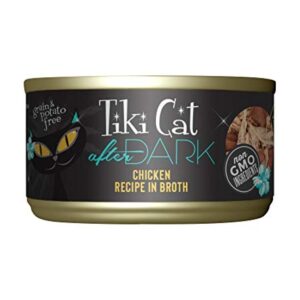
Tiki Cat After Dark Chicken recipe in broth
Best for: A Sphynx household adding moisture, when the can in the case matches the calorie you counted
- Guaranteed analysis
- Protein 12% min, fat 2.2% min, fiber 0.7% max, moisture 83% max.
- Two can sizes
- 66 kcal per 2.8 oz can, or 128 kcal per 5.5 oz can.
- Feeding line
- Three 2.8 oz cans, or 1 and 1/2 of the 5.5 oz cans, per day for a 7 lb adult.
- Not this recipe
- The quail shreds page is 10% protein and 68 kcal per can.
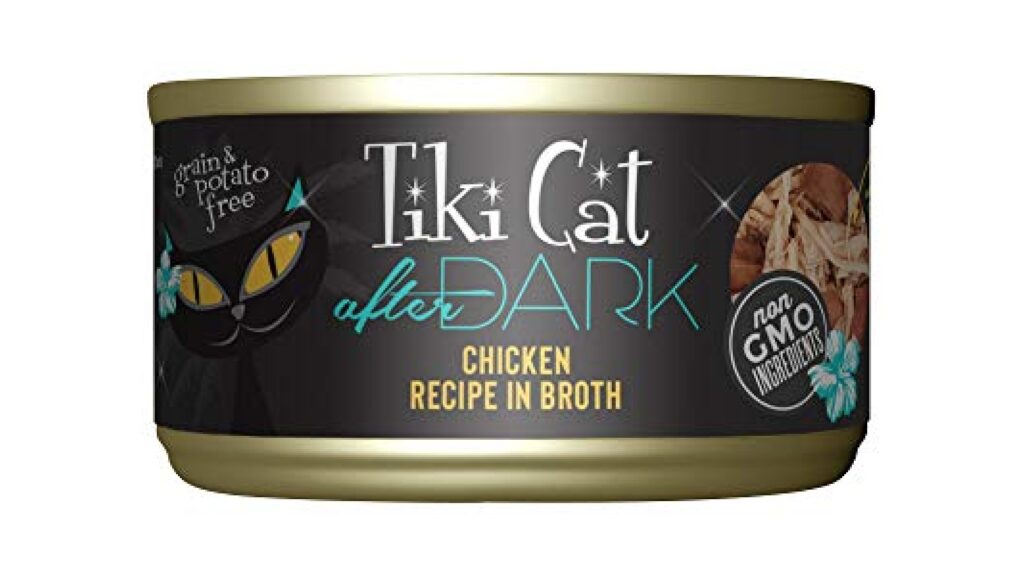
Tiki Cat After Dark Chicken is the wet pick we treat as the default “low carb” bowl. The manufacturer panel leads with chicken, chicken broth, chicken liver, chicken gizzard, and chicken heart, then minerals, vitamins, taurine, and tuna oil—no grains, legumes, or starches. Guaranteed analysis: 12% protein, 2.2% fat, 0.7% fiber, 83% moisture, about 66 kcal per 2.8 oz can (128 kcal per 5.5 oz).
Using the residual NFE method with a typical wet-food ash estimate (~2–3%), estimated carbs land near zero as-fed—exactly why meat-in-broth recipes dominate honest low-carb roundups. That estimate is not a lab assay, and “low carb” is still not an AAFCO-regulated claim. Verified Creators listing: .
Pros
- The page prints both can calories, so a variety case cannot hide the size
- Chicken, broth, liver, gizzard, and heart are the first ingredients
Cons
- The chicken page we opened does not print the maintenance sentence that sits on a different After Dark pâté
- A kitten line says up to twice the adult amount, which is not a growth statement
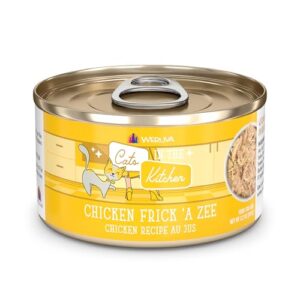
Weruva Cats in the Kitchen Chicken Frick ‘A Zee
Best for: An adult Sphynx when you want moisture and a printed taurine minimum, and you will ignore the typical-analysis sheet
- Guaranteed analysis
- Protein 10% min, fat 2.5% min, fiber 0.5% max, moisture 85% max, taurine 0.05% min.
- Calories
- 75 kcal per 3.2 oz, 142 per 6 oz, 237 per 10 oz, 833 kcal/kg.
- Life stage on the page
- Adult. Complete and balanced is a feature line, not a feeding-test sentence.
- Not the guarantee
- The brand nutrition PDF lists a typical as-fed protein of 12.54% for this recipe.
Weruva Chicken Frick ’A Zee lists chicken, chicken broth, sunflower seed oil, then gums, calcium lactate, fish oil, and the vitamin–mineral pack. Guaranteed analysis on Weruva’s product page: 10% protein, 2.5% fat, 0.5% fiber, 85% moisture, 1.5% ash (max), about 75 kcal per 3.2 oz can. Residual carbs work out near 0.5% as-fed (~3% DMB)—one of the cleaner OTC calculations because ash is printed.
Weruva markets the Cats in the Kitchen line as starch-free and grain-free. That matches the ingredient deck here; it still does not make the can a diabetic prescription. Creators-verified case: .
Pros
- Taurine is on the guaranteed analysis, at 0.05% minimum
- Three can sizes each have a calorie, so the 3.2 oz can is not the 10 oz can
Cons
- The typical-analysis PDF sits above the guarantee and is easy to quote by mistake
- The page we opened labels the recipe adult
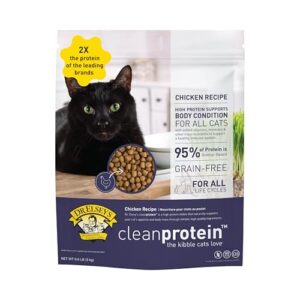
Dr. Elsey’s cleanprotein Chicken Cat Kibble (6.6 lb)
Best for: Households that need a dry food but want animal-protein-first math closer to prey than pea-heavy grain-free bags
- First ingredients
- Chicken, hydrolyzed pork, pork plasma, gelatin, chicken fat
- Crude protein (min)
- 59%
- Crude fat (min)
- 17%
- Crude fiber (max)
- 4%
- Moisture (max)
- 12%
- Calories
- 3,953 kcal/kg (523 kcal/cup)
- AAFCO statement
- All life stages (nutrient profiles)
- Est. carbs (NFE → DMB)
- ~0–3% as-fed → ~0–3% DMB (ash estimate)
Dr. Elsey’s cleanprotein Chicken is the dry outlier. The manufacturer lists chicken, hydrolyzed pork, pork plasma, gelatin, chicken fat (mixed tocopherols), ground flaxseed, then minerals/vitamins/taurine—no corn, wheat, rice, peas, or tapioca. Guarantees: 59% protein, 17% fat, 4% fiber, 12% moisture, taurine 0.15% min, about 3,953 kcal/kg (523 kcal/cup). Formulated to meet AAFCO Cat Food Nutrient Profiles for all life stages.
NFE residual math with a typical dry ash estimate (~5–8%) puts carbs in the very low single digits as-fed and on a dry-matter basis—far below pea-heavy “grain-free” kibbles. Brand copy mentions support for overweight and diabetic cats; that is marketing adjacent to veterinary use, not a substitute for a prescribed diabetic diet or insulin plan. Verified 6.6 lb listing: (2 lb also exists).
Pros
- 59% protein min with chicken first; brand cites 90%+ animal-based protein
- No grains, peas, chickpeas, or tapioca on the chicken recipe panel
- Published kcal/cup; all-life-stages nutrient-profile statement
- Brand positions the line for active, overweight, and diabetic-support contexts—still ask your vet before medical use
Cons
- Hydrolyzed pork / plasma / gelatin texture and smell are polarizing
- Still dry food—lower moisture than wet options
- Price per pound is premium vs grocery kibble
- Carb estimate depends on ash; GA mins/maxes are not typical nutrient values
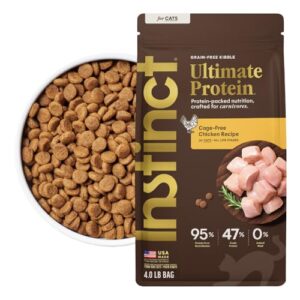
Instinct Ultimate Protein Dry Cat Food, Cage-Free Chicken (4 lb)
Best for: Cats that need a high-protein grain-free dry and tolerate a tapioca binder, when wet food cannot cover every meal
- First ingredients
- Chicken, tapioca, chicken fat, ground flaxseed
- Crude protein (min)
- 47%
- Crude fat (min)
- 17%
- Crude fiber (max)
- 3%
- Moisture (max)
- 10%
- Taurine (min)
- 0.15%
- AAFCO statement
- Maintenance (nutrient profiles; confirm bag)
- Est. carbs (NFE → DMB)
- ~15–18% as-fed → ~17–20% DMB
Instinct Ultimate Protein Cage-Free Chicken leads with chicken, tapioca, chicken fat, ground flaxseed, natural flavor, dried tomato pomace, dried whey protein concentrate, then vitamins, minerals, taurine, freeze-dried pollock, pumpkinseeds, and Bacillus coagulans. Guarantees: 47% protein, 17% fat, 3% fiber, 10% moisture, taurine 0.15% min. Brand materials emphasize 95% of protein from chicken and “no animal meal.”
That protein story is real. The carb story is not “ultra-low”: tapioca is a starch binder, and NFE estimates commonly land near 17–20% DMB. Keep this bag in the roundup as an honest high-protein dry—not as a low-carb champion.amazon.com/dp/?tag=catsluvus03-20" target="_blank" rel="sponsored nofollow noopener"> (10 lb ).
Pros
- Chicken first; brand claims 95% of protein from real chicken, no animal meal
- 47% protein min with probiotics and freeze-dried pollock accents
- Grain/potato/corn/wheat/soy-free marketing
- Widely available 4 lb and 10 lb bags
Cons
- Tapioca as second ingredient = intentional starch binder
- Not competitive with After Dark / Weruva / cleanprotein on carb math
- Maintenance AAFCO language on many listings—confirm life stage on your bag
- Creators feature text sometimes confuses RawBoost lines—verify Ultimate Protein on the bag
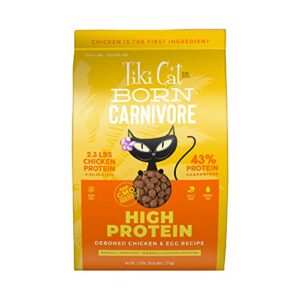
Tiki Cat Born Carnivore Dry Cat Food, Deboned Chicken & Egg (2.8 lb)
Best for: Mixed feeders who like Tiki’s baked kibble and will use wet food to pull average daily carbs down
- First ingredients
- Deboned chicken, chicken meal, dehydrated chicken, dried egg, tapioca
- Crude protein (min)
- 43%
- Crude fat (min)
- 19%
- Crude fiber (max)
- 3.5%
- Moisture (max)
- 10%
- Calories
- 3,795 kcal/kg (482 kcal/cup)
- Carb sources
- Tapioca, chickpeas, peas
- Est. carbs (NFE → DMB)
- ~15–18% as-fed → ~17–20% DMB
Tiki Cat Born Carnivore Deboned Chicken & Egg lists deboned chicken, chicken meal, dehydrated chicken, dried egg product, tapioca, then flaxseed, chickpeas, peas, chicken fat, yeast, prebiotic inulin, salmon oil, and pumpkin. Guarantees: 43% protein, 19% fat, 3.5% fiber, 10% moisture, about 3,795 kcal/kg (482 kcal/cup).
This is a strong high-protein dry that still uses classic kibble binders. Estimated DMB carbs land near the high teens—similar math territory to Instinct Ultimate Protein, not Dr. Elsey’s cleanprotein. Use it when you want Tiki flavor continuity beside After Dark, not when you are chasing the absolute lowest residual carbs. Verified listing: .
Pros
- Deboned chicken first with chicken meal and egg support
- Published 482 kcal/cup; gently baked brand story
- Pairs cleanly with After Dark wet for mixed bowls
- Complete and balanced for all life stages (brand materials)
Cons
- Peas, chickpeas, and tapioca mean this is not an ultra-low-carb dry
- Grain-free marketing can mislead carb-focused shoppers
- 2.8 lb trial bag is pricey per pound vs larger sizes
- Not a diabetic prescription kibble
The grain-free trap
Front-of-bag “grain free” stickers sell well. They do not guarantee low starch. Instinct Ultimate Protein puts tapioca second. Born Carnivore uses tapioca, chickpeas, and peas after the meat block. Both can be excellent high-protein dry foods for the right cat—and still land near ~18% estimated DMB carbs. If carbs are why you are shopping, read past the grain-free badge.
AAFCO, complete diets, and moisture
Every pick here is sold as a complete food for the life stage on its label—not as a mixer-only topper (unless you choose to use it that way). Formulation-based AAFCO statements mean the recipe was calculated to nutrient profiles; they are not the same as feeding-trial language. Cornell’s broader feeding guidance still emphasizes complete diets, calorie control, and moisture. Pairing a lower-carb dry with a high-moisture wet often beats dry-only “diet” marketing for cats that barely drink.
See the FDA explainer on complete and balanced pet food and AAFCO’s label-reading guide.
These OTC picks fit when
- You want lower estimated carbs without inventing a homemade diet
- You can feed mostly wet meat-in-broth recipes
- You need one comparatively binder-light dry (cleanprotein) for free-feeding logistics
- You will still measure calories and transition slowly
Skip or call your vet when
- Your cat needs a prescription diabetic, renal, or GI diet
- You assumed grain-free automatically means low carb
- You want us to invent boarding trials or lab carb assays—we will not
- You are adjusting insulin from a blog post
Recalls note
During this research pass (2026-09-24 PT) we did not find active FDA recall listings that pull the specific ASINs above. Brand histories change—verify rumors against the FDA recalls & withdrawals page and the lot code on your can or bag before you panic-buy or panic-toss.
Who this roundup is for
Good fit: healthy cats whose people want prey-like macros; mixed feeders willing to open cans; shoppers who will do NFE math instead of trusting buzzwords.
Poor fit: newly diagnosed diabetics without veterinary guidance; cats already prescribed a therapeutic diet; anyone looking for invented boarding feeding-trial storytelling—this rebuild track does not invent that.
How to switch without wrecking the litter box
Move over 7–10 days (longer for sensitive guts). Match calories: three 2.8 oz After Dark cans (~198 kcal) is a different day than a heaping cup of cleanprotein (~523 kcal). Keep water available; better, make wet the majority of the bowl if carbs are the goal. Call your veterinarian for vomiting, refusal to eat, or diarrhea that lasts more than a day or two.
Low-carb cat food FAQ
Is “low carb” a regulated claim on cat food?
No. U.S. labels are not required to list carbohydrate percentage today (AAFCO modernization is moving that direction). Marketing phrases like “low carb” or “starch-free” are brand claims—verify with the ingredient deck and NFE math, not the front of the can.
How do I estimate carbs from the guaranteed analysis?
Add crude protein + crude fat + crude fiber + moisture + ash, subtract from 100. That residual is approximate carbohydrate (NFE). Divide by (100 − moisture) and multiply by 100 for a dry-matter estimate. If ash is missing, use rough defaults (~1.5–3% wet, ~5–8% dry). Guaranteed mins/maxes are not typical values—treat the result as a ballpark.
Is wet cat food lower in carbs than dry?
Often yes. Meat-in-broth recipes like After Dark and many Weruva cans have little or no starch. Kibble usually needs a binder (tapioca, peas, grains, potato). Ultra-high-protein dry foods like Dr. Elsey’s cleanprotein can be comparatively low-carb, but they still lack wet-food moisture.
Does grain-free mean low carb?
No. Peas, chickpeas, lentils, tapioca, and potato are common grain-free starches. Born Carnivore and Instinct Ultimate Protein are examples of high-protein grain-free dry foods that still carry meaningful estimated carbs.
What is the best low-carb dry cat food in this roundup?
Dr. Still transition slowly and confirm the bag in your hand.
What is the best low-carb wet cat food here?
Tiki Cat After Dark Chicken for organ-inclusive shreds with near-zero estimated carbs, or Weruva Frick ’A Zee if you want published ash and starch-free marketing with gravy texture.
Can low-carb food help a diabetic cat?
Cornell notes that low-carbohydrate diets can improve blood-sugar regulation in diabetic cats, often alongside insulin or other prescribed therapy. That is veterinary territory—do not change insulin, start OTC “diabetic” feeding, or chase remission from a blog. Ask your vet about prescription options and monitoring.
Are these foods AAFCO complete and balanced?
The products we profile carry AAFCO nutrient-profile (formulation) statements for the life stages noted on their manufacturer pages or bags (all life stages for Dr. Elsey’s chicken and Tiki Born Carnivore materials; maintenance language common on Instinct Ultimate Protein listings; Weruva adult guidance for Frick ’A Zee). Formulation ≠ feeding trial. Read the adequacy statement on your package.
Did Cats Luv Us run a feeding trial on these foods?
No. This is a labels-and-literature roundup (research_basis=labels). We do not invent boarding feeding trials, coat timelines, or lab assays.
Should I buy a prescription diabetic diet instead?
If your cat is diagnosed with diabetes (or another condition needing a therapeutic diet), follow your veterinarian’s prescription—Hills, Royal Canin, Purina Pro Plan Veterinary Diets, and similar lines exist for a reason. OTC high-protein wet foods can be discussed with your vet; they are not automatic substitutes.
How should I transition to a lower-carb food?
Change over 7–10 days (longer if stools loosen): roughly 25% new / 75% old, then 50/50, then 75/25, then full new. Match calories, not just cups—After Dark at 66 kcal/can feeds differently than a 523 kcal/cup kibble. Keep fresh water down.
Bottom line
Balancing carbohydrates for cats starts with honesty: low carb is a calculation, not a regulated badge. Stock Tiki After Dark or Weruva Frick ’A Zee for everyday low estimated carbs, keep Dr. Elsey’s cleanprotein as the dry escape hatch, and treat Instinct Ultimate Protein and Born Carnivore as high-protein kibbles with real binders. Medical diets stay with your vet. Traveling? Cats Luv Us can keep your cat on the exact food you already dialed in.
Sources
- Dr. Elsey’s — Chicken Recipe Kibble (ingredients, GA, kcal)
- Tiki Cat — After Dark Chicken Recipe in Broth
- Tiki Cat — Born Carnivore Deboned Chicken & Egg
- Instinct — Ultimate Protein Cage-Free Chicken dry
- Weruva — Cats in the Kitchen Chicken Frick ’A Zee
- Cornell Feline Health Center — Feline diabetes
- AAHA — 2026 diabetes guidelines, dietary management (section 8)
- AAFCO — Reading pet food labels
- FDA — Complete and balanced pet food
- FDA — Pet food recalls & withdrawals
- Amazon Creators API listing checks (2026-09-24 PT): , , , ,
- Competitor topic map only (not copied): SmartPetHabits low-carb roundups; Cat Site DMB/carb guides; PawDiet Instinct Ultimate Protein page
Going away? Keep your cat's routine on track.
Cats Luv Us Boarding Hotel & Grooming in Laguna Niguel, Orange County.