Feeding Feral Felines Best Cat Food Options (2026 Colony Guide)
Colony feeding is logistics first: complete dry food on a daylight schedule, wet only with a 30-minute pickup, kitten bags when litters appear—and TNR beside every receipt. Seven Creators-verified picks.

In this review 10 sections
CatsLuvUs Copilot Search
Ask this review — not the open web
Answers are generated from this Cats Luv Us review only. We may earn a commission from Amazon links. Not veterinary advice.
Answer from this review
This score is editorial — based on labels, recall history, and veterinary guidance, not a lab test. How we evaluated.
Default to complete dry on a daylight schedule—step up when the budget allows
The best cat food for feral felines is a complete-and-balanced dry bag you can afford every day—paired with water, leftover pickup, and TNR. Our default is Purina Cat Chow Complete (22 lb). Stretch further with Friskies Seafood Sensations or Meow Mix Original when the budget is brutal; step up to Purina ONE Tender Selects or IAMS Healthy Adult when donations allow. Use Friskies Pâté only in supervised windows, and keep Kitten Chow Year One ready when litters appear. Soft-links: wet buyer’s guide, Purina ONE review, IAMS vs Purina.
Quick picks for colony caretakers
How we scored colony / feral cat foods
This is a label roundup (research_basis=labels). The Cats Luv Us Team compared AAFCO complete-and-balanced statements, dry-station practicality, cost-per-calorie for multi-cat colonies, wet-food supervision limits, and kitten-growth needs on Cat Chow Complete, Friskies Seafood Sensations, Meow Mix Original, Purina ONE Tender Selects, IAMS Healthy Adult, Friskies Pâté, and Kitten Chow Year One. Amazon titles and images were verified through the Creators API (catsluvus03-20). We did not run boarding-hotel colony trials, invent acceptance rates, or paste competitor listicle prose.
Editorial score weights
Scores are editorial judgments on a 1–5 scale using these fixed weights. They are not lab results or veterinary diagnoses.
- 25%Label transparency & AAFCO completeness — Guaranteed analysis, calorie statement, and life-stage claim you can verify on the bag.
- 25%Ingredient quality & honesty — Named meats vs by-product meal placement, plant-protein load, and marketing vs ingredient list.
- 20%Nutrition fit for the claim — Whether the formula matches what the front of bag promises (kitten, indoor, urinary, etc.).
- 15%Safety & recall record — Brand and line recall history, plus how clearly the company communicates issues.
- 15%Shopper practicality — Availability, price tier, and whether the lineup is easy to buy without outdated SKUs.
- Complete & balanced honesty — AAFCO adult maintenance or growth language you can find on the bag, not “supplemental only.”
- Station practicality — dry wins for unattended minutes; wet only with a timed pickup.
- Colony cost math — calories and bag size for many mouths, not single-pet boutique pricing.
- Caretaker logistics — grocery/Amazon availability, daylight routines, leftover removal.
- Life-stage coverage — adult bags plus a growth option when litters appear.
Safety first: TNR, ordinances, and what not to feed
Feeding community cats is a commitment with neighbors and wildlife in the loop, not a weekend hobby. HumanePro’s community-cat feeding guidelines start with knowing local ordinances — some cities restrict feeding, require registration, or funnel caretakers into managed TNR programs. Before you put bowls down, call animal care & control or a local TNR group and learn the rules that apply to your block.
Trap-Neuter-Return (TNR) belongs beside the food budget. Sterilization and ear-tipping curb the behaviors that generate complaints (spraying, fighting, endless litters) and connect you to people who can help when a cat is injured. Food without TNR often grows the colony you hoped to help.
Do not dump human leftovers, milk, raw poultry scraps, or dog food as the colony diet. Cats need complete feline nutrition (including taurine); dog food and table scraps are not a substitute. Milk commonly causes digestive upset. If a neighbor “means well” with tuna water and pizza crusts, redirect them to a sealed bag of complete cat food and a shared feeding schedule.
When a cat is limping, crusty-eyed, not eating, or unusually approachable with a wound, loop in a clinic or TNR partner as soon as you can — outdoor cats rarely get better on kibble alone. We are a label-and-practice guide, not your veterinarian.
Dry vs wet for feral and community cats
Alley Cat Allies notes that wet food is beloved but dry food is just as nutritious for colony feeding, and HumanePro’s portion guidance is written primarily around kibble (~½–¾ cup per adult per day, with ~15% more in cold weather). Dry wins on spoilage, ants, freezing, and cost. Wet wins on moisture and trapping bait — if you stay for the meal.
Practical split many caretakers use: dry as the daily staple at a consistent daylight station; wet only during supervised windows (about 15–30 minutes), then bowls and cans leave with you. In deep freeze or extreme heat, skip wet unless you can warm cans and watch them disappear. For wet-label shopping criteria (AAFCO, moisture, dry-matter math), use our wet cat food buyer’s guide — this page stays focused on colony logistics.
How much to put down (and when to pick it up)
Start from published caretaker rules of thumb, then adjust with your eyes:
- Alley Cat Allies: about 5.5 oz wet + 2 oz dry per adult per day, or roughly ½ cup dry if dry-only — then adjust.
- HumanePro: roughly ½–¾ cup kibble per cat per sitting, more in cold weather; remove leftovers with dishes after ~30 minutes.
- Finish-rate test: gone in under 15 minutes → offer a bit more next time; substantial leftovers at 30 minutes → offer less.
Feed at the same time and place, preferably daylight, so cats learn the schedule and nocturnal wildlife is less invited. Keep a simple headcount log — new faces, missing regulars, and nursing queens change the math overnight. Quiet stations away from bird feeders reduce conflict; elevated or covered stations help in raccoon country (see HumanePro’s station notes).
Best cat food options for feeding feral felines
Competitor listicles often lead with boutique or “premium” bags that blow a twelve-cat monthly budget. Our picks stay in the grocery and mid-tier aisle caretakers actually refill: Cat Chow Complete as the default dry, Friskies and Meow Mix as ultra-budget bridges, Purina ONE and IAMS as step-ups, Friskies Pâté for supervised wet, and Kitten Chow when litters arrive. Soft-compare grocery brands in our IAMS vs Purina review when you are choosing between mid-tier bags.
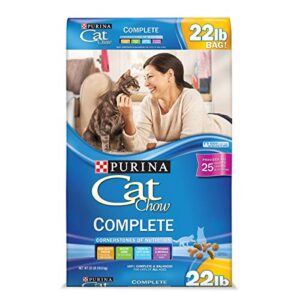
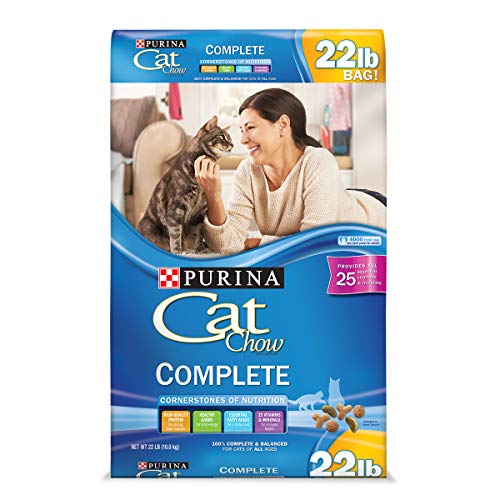
Purina Cat Chow Complete High Protein Dry Cat Food (22 lb)
Best for: Community-cat caretakers who need a reliable adult Complete bag for daily dry feeding stations
- Role
- Best overall colony dry
- Pack (Creators)
- 22 lb bag
- Format
- Dry kibble — primary colony staple
- AAFCO / label cue
- Complete high-protein Cat Chow line — confirm life-stage statement on your bag
- Colony fit
- Big bag, wide grocery/Amazon availability, dry station practicality
- Standout
- Balances cost and completeness better than ultra-bargain corn-first bags for most colonies
Purina Cat Chow Complete (22 lb) is our default colony dry pick when you need a complete grocery bag that scales. Alley Cat Allies and HumanePro both treat dry food as a fully acceptable sole colony diet when portions are controlled and leftovers are pulled — and a 22 lb Complete bag is how most caretakers actually buy. Confirm the AAFCO nutritional adequacy statement on your bag (adult maintenance vs all life stages). Pair with daylight feeding, clean bowls, and fresh water — not free-choice piles left overnight.
Pros
- Warehouse-size bag for multi-cat daily feeding
- Complete Cat Chow framing caretakers already recognize
- Dry format survives station logistics better than wet
- Creators-verified Amazon packshot for this rebuild
Cons
- Plant proteins still appear mid-list — not a boutique meat-heavy diet
- Not a therapeutic urinary/renal/kidney formula
- Recipe revisions happen — read the lot in your hand
- Still need TNR, water, and leftover pickup — food alone is not colony care
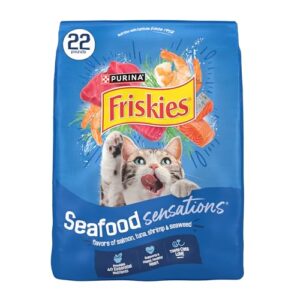
Friskies Purina Seafood Sensations Dry Cat Food (22 lb)
Best for: Large colonies and foster networks that must maximize calories per dollar on dry food
- Role
- Best ultra-budget dry
- Pack (Creators)
- 22 lb bag
- Format
- Dry kibble
- AAFCO / label cue
- Complete adult Friskies dry — confirm statement on bag
- Colony fit
- Lowest practical cost tier with wide availability
- Standout
- Flavor variety that many outdoor cats finish when hungrier offerings fail
Friskies Seafood Sensations (22 lb) is the ultra-budget dry we reach for when a colony’s monthly food bill is the binding constraint. Complete grocery dry beats table scraps, dog food, or nothing — but treat it as the floor, not a flex. If donations improve, graduate the same station schedule to Cat Chow Complete or Purina ONE without changing the caretaker routine.
Pros
- Among the cheapest complete dry options at warehouse size
- Widely stocked in grocery and big-box aisles
- Dry logistics match colony station practice
- Useful bridge food while you fundraise for a step-up bag
Cons
- Ingredient list is plant-heavy vs mid-tier meat-first bags
- Artificial colors common on Friskies dry — cats do not care; some caretakers do
- Not ideal as a forever diet if budget later allows Cat Chow Complete or ONE
- Still must remove leftovers — cheap food attracts wildlife just as fast
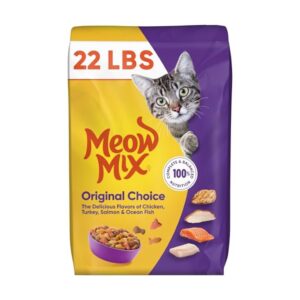
Meow Mix Original Choice Dry Cat Food (22 lb)
Best for: Caretakers stocking whatever the nearest grocery endcap has on sale for community cats
- Role
- Best grocery familiarity
- Pack (Creators)
- 22 lb bag
- Format
- Dry kibble
- AAFCO / label cue
- Complete Original Choice — verify life stage on package
- Colony fit
- Maximum retail ubiquity; sale pricing common
- Standout
- Familiar brand for donation drives and neighbor handoffs
Meow Mix Original Choice (22 lb) shows up in more garage freezers and church donation piles than almost any other bag. As a complete dry food it can keep a colony fed; as a long-term sole diet we still prefer Cat Chow Complete or IAMS when the receipt allows. Use it honestly: better than human leftovers, not the ceiling of what grocery money can buy.
Pros
- Nearly universal grocery availability
- Easy to request in donation drives by brand name
- Complete dry format for stations
- Often on deep discount — stretch a TNR clinic weekend
Cons
- Corn/soy-forward lists trail meat-first mid-tier bags
- Forum consensus often ranks it below Cat Chow for sole diets — we agree when budget allows a step-up
- Not a kitten growth formula
- Do not confuse brand familiarity with premium nutrition
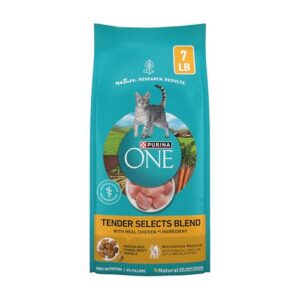
Purina ONE Tender Selects Blend With Real Chicken Dry Cat Food (7 lb)
Best for: Smaller colonies, newly TNR’d cats being socialized, or caretakers who can spend more per calorie
- Role
- Best step-up dry
- Pack (Creators)
- 7 lb bag (also sold in larger sizes)
- Format
- Dry kibble
- AAFCO / label cue
- Purina ONE adult dry — many bags cite feeding-trial language; confirm yours
- Colony fit
- Higher cost/calorie — best for smaller colonies or mixed indoor/outdoor traps
- Standout
- Chicken-first positioning vs ultra-budget grocery bags
Purina ONE Tender Selects (chicken) is our step-up dry when donations or a smaller colony make mid-tier nutrition realistic. Deep brand detail lives in our Purina ONE Cat Food Review — here we only ask whether the bag’s AAFCO statement and calorie budget fit outdoor station reality. For weight-loss indoor cats, see our separate dry weight guide; do not put Perfect Weight formulas on a cold-weather colony by default.
Pros
- Named chicken emphasis vs corn-first ultra-budget bags
- Same Purina supply chain many shelters already trust
- Soft-links cleanly to our full Purina ONE review
- Good “graduation” bag after TNR when a cat may be adopted
Cons
- 7 lb Creators pack is small for a 12-cat colony — buy larger sizes in-store when needed
- Costs more per month than Friskies/Cat Chow at equal calories
- Not a prescription diet
- Indoor Advantage / weight SKUs are different formulas — do not assume interchangeability
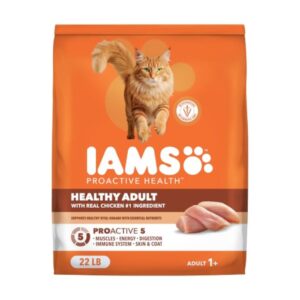
IAMS Proactive Health Healthy Adult Dry Cat Food, Chicken (22 lb)
Best for: Multi-cat outdoor stations that can clear mid-tier pricing and want a named-meat-first bag
- Role
- Best mid-tier dry
- Pack (Creators)
- 22 lb bag
- Format
- Dry kibble
- AAFCO / label cue
- Healthy Adult chicken formula — confirm maintenance statement
- Colony fit
- 22 lb sizing matches Cat Chow logistics at a step above ultra-budget
- Standout
- Named chicken + digestive fiber cues without boutique markup
IAMS Proactive Health Healthy Adult (chicken, 22 lb) is the mid-tier dry we recommend when Cat Chow feels too plant-heavy but boutique bags blow the colony budget. For aisle-by-aisle grocery brand tradeoffs, see IAMS vs Purina. Keep feeding schedules identical when you switch brands — change one variable at a time and watch stools and finish rates for a week.
Pros
- 22 lb bag fits real colony math
- Chicken-first vs many ultra-budget formulas
- Widely available alongside Purina in US grocery
- Pairs with our IAMS vs Purina grocery comparison for shoppers comparing aisles
Cons
- Still includes grains/plant proteins — not a grain-free boutique diet
- Indoor Weight & Hairball and Urinary SKUs are different — match the bag to the need
- Price sits above Friskies/Meow Mix
- Not a vet therapeutic line
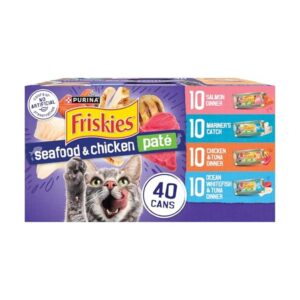
Purina Friskies Pâté Wet Cat Food Variety, Seafood & Chicken (40 × 5.5 oz)
Best for: Daylight supervised feedings, trapping bait, cold-weather calorie boosts when wet will not freeze before cats finish
- Role
- Best supervised wet
- Pack (Creators)
- 40 × 5.5 oz cans
- Format
- Pâté wet — supervised only
- AAFCO / label cue
- Complete Friskies pâté variety — confirm each SKU
- Colony fit
- Hydration + palatability for trapping/TNR mornings
- Standout
- Case pricing makes wet feasible without boutique cans
Friskies Pâté (40 × 5.5 oz) is our supervised wet pick — not a substitute for dry station logistics. HumanePro and Alley Cat Allies both stress removing uneaten food within about 30 minutes. Use wet for trapping bait, dental-challenged seniors you can monitor, or winter calories when you can warm cans and stay on site. Label-buying criteria for wet food generally live in What To Know About The Best Wet Cat Food.
Pros
- High moisture vs dry-only stations
- Strong aroma helps shy ferals approach during TNR trapping
- Warehouse case economics
- Criteria detail in our wet buyer’s guide soft-link
Cons
- Spoils and freezes — unfit for unattended stations
- Attracts insects/wildlife if left out
- Heavier to haul than kibble bags
- 5.5 oz cans can waste food if only one cat shows — portion into bowls
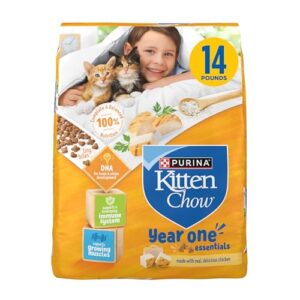
Purina Kitten Chow Year One Essentials Dry Kitten Food (14 lb)
Best for: Colonies where nursing queens and weaned kittens share a station and need growth nutrition
- Role
- Best when kittens appear
- Pack (Creators)
- 14 lb bag
- Format
- Dry kitten / Year One
- AAFCO / label cue
- Growth / kitten Complete — confirm Year One statement
- Colony fit
- Separate dish when possible so adults do not monopolize
- Standout
- Honest growth labeling vs adult bags fed to 8-week-olds
Kitten Chow Year One Essentials (14 lb) belongs on the shopping list the week you spot new litters — then put equal energy into trapping. Adult Complete bags are not automatically appropriate as the sole diet for growing kittens. Offer kitten food in a quieter dish, keep wet supervised if mouths are tiny, and move socializable kittens toward foster. Feeding without TNR grows the colony you are trying to stabilize.
Pros
- Growth nutrition for kittens and often nursing queens
- Same Cat Chow supply chain as the adult Complete bag
- 14 lb is manageable for foster-to-adopt pipelines
- Signals caretakers to count litters and book TNR
Cons
- Calorie-dense — monitor adult freeloaders at the kitten dish
- Does not replace vaccines, deworming, or early sterilization
- Not a long-term adult maintenance strategy for the whole colony
- Socializable kittens deserve foster homes — food is not the end goal
What we like
- Colony-first scoring: dry station practicality, cost-per-calorie, supervised wet limits
- Seven Creators-verified grocery/mid-tier picks with Media Library images
- Hard hedges for TNR, ordinances, and no human-food dumping
- Soft-links wet guide, Purina ONE, IAMS vs Purina, and dry weight pages instead of cannibalizing them
What we don't
- Boutique “best feral food” listicles will disagree — we optimize for refillable budgets
- Labels revise; always confirm the bag in your hand
- Cannot replace local TNR program rules or veterinary care
- Ultra-budget bags are complete but plant-heavy — step up when you can
Weather, water, and station hygiene
Fresh water is non-negotiable year-round. In winter, use insulated bowls, frequent swaps, or purpose-built heated dishes so water is not a skating rink. In summer, multiply water sources and shade the station. Ants and flies mean you are leaving food too long — shorten the window, elevate bowls, and clean residue. Uneaten food left overnight is how caretakers lose neighbor goodwill.
Expect appetite to rise in cold snaps (HumanePro cites about 15% more). That is calories for thermoregulation, not a reason to free-feed overnight. If a formerly reliable eater stops showing, check for injury, trapping success by someone else, or a new tom dominating the station — then adjust dish count and timing.
Honest limits of this guide
We score bags from labels, Creators-verified retail listings, and published colony-care guidance — not from secret boarding-hotel field trials. Macro mineral needs, parasite loads, and FeLV/FIV status vary by cat; a complete bag cannot replace vaccines, sterilization, or clinic care. If your municipality runs a structured community-cat program, follow their feeding and TNR protocols even when they differ slightly from this shopping list.
Feral and community cat feeding FAQ
Where do I find the AAFCO statement on a colony-size bag?
Flip past the hero photo to the back or side panel near the guaranteed analysis. You want “complete and balanced” plus a life stage (adult maintenance, growth, or all life stages). “For intermittent or supplemental feeding only” means it is not a sole diet — common on some treats and toppers, not what you want as the only station food.
Are milk, tuna water, or table scraps okay “just this once”?
Skip them as routine colony food. Milk often triggers diarrhea; greasy leftovers invite wildlife and complaints; tuna water is not a balanced meal. If someone already dumped scraps, clean the area, reset to measured complete cat food, and share the daylight schedule so well-meaning neighbors stop freelancing.
How should winter change the shopping list?
Budget more dry calories (about 15% is a common caretaker guide), prioritize antifreeze-safe water plans, and use wet only if you can keep it from freezing before cats finish. Insulated carriers or hand warmers under bowls help for short supervised wet feedings — then everything leaves with you.
When is it time to call a TNR group or clinic instead of buying another bag?
When intact cats keep producing litters, when neighbors file complaints, when a cat is injured or severely skinny, or when you cannot cover feeding while traveling. Food stabilizes a colony; sterilization and vaccines make it sustainable. Ask shelters, universities, or municipal animal services for local TNR contacts.
Should I buy indoor weight-management dry for chubby colony cats?
Usually not as the default outdoor station food. Cold-weather community cats often need maintenance calories, not a Perfect Weight indoor formula. If a specific socialized cat is obese indoors, that is a different problem — see our dry weight-loss guide and involve a veterinarian rather than swapping the whole colony bag.
Did Cats Luv Us “test” these foods on a feral colony?
No. This article’s research_basis is labels: packaging claims, Creators catalog titles/images, and published guidance from groups such as Alley Cat Allies and HumanePro. We do not invent boarding-hotel colony trials or acceptance percentages.
How does this page differ from your wet-food and Purina ONE reviews?
This page is about colony logistics and grocery-scale picks. The wet buyer’s guide teaches can-label criteria; the Purina ONE review deep-dives one mid-tier brand. Use soft-links — do not expect this article to re-score every Pro Plan SKU.
Sources
- Alley Cat Allies — Community & Feral Cat Feeding Tips (food and water)
- HumanePro / Humane World for Animals — Community cat feeding guidelines
- HumanePro — Community Cat Feeding Guidelines PDF
- AAFCO — Selecting the Right Pet Food
- AAFCO — Reading Labels / nutritional adequacy statements
- Cornell Feline Health Center — Feeding Your Cat
- Catster — What To Feed A Colony of Feral Cats (vet-reviewed tips; topic map only)
- Amazon Creators API
getItems/searchItems— pack titles and images for the products above (partner tag catsluvus03-20), 2026-09-25 PT
Going away? Keep your cat's routine on track.
Cats Luv Us Boarding Hotel & Grooming in Laguna Niguel, Orange County.