Cat Carrier vs Soft-Sided Crate (2026): Expert Guide
Hard carriers win most vet and car trips; soft-sided crates win under-seat cabin flights—if your airline’s PDF agrees. We mapped both sides with AAFP/ISFM literature and Creators listings, not boarding-hotel “expert tests.”

In this review 12 sections
CatsLuvUs Copilot Search
Ask this review — not the open web
Answers are generated from this Cats Luv Us review only. We may earn a commission from Amazon links. Not veterinary advice.
Answer from this review
This score is editorial — based on labels, recall history, and veterinary guidance, not a lab test. How we evaluated.
Buy a hard top-load for everyday + vet; add a soft cabin bag only if you fly
Default: a hard plastic top-and-front door carrier (Creators-verified Amazon Basics 2-Door Top-Load or Petmate Two-Door) so clinics can examine your cat in the base—matching AAFP Cat Friendly guidance. Add a soft-sided cabin carrier (Sherpa Original Deluxe for the classic Guaranteed On Board pitch, Sleepypod Air when crash-tested marketing and plush bedding matter, or SturdiBag when flex-height under-seat fit is the bottleneck). Use Petmate Sky Kennel when the itinerary is cargo, not cabin. Soft carriers are lighter and washable; they are usually the wrong sole tool for rough car rides or exams that need a removable hard shell. This is literature + label research—not a Cats Luv Us boarding trial.
Quick picks: hard carrier vs soft-sided crate
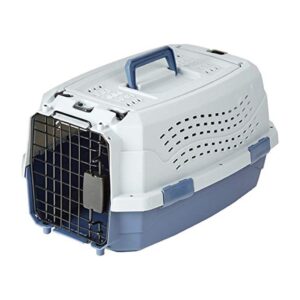
- Top + front doors
- Steel wire door
- Easy scrub plastic
- Spring-wire compress
- Mesh ventilation
- Shoulder strap
- Crash-tested marketing
- Washable bedding
- Car + cabin dual use
- IATA-oriented build
- LIVE ANIMAL stickers
- USA EcoTEC plastic
How we compared hard carriers vs soft-sided crates
Despite the legacy Engaging headline that said “Expert Guide,” this rebuild is literature- and label-based. The Cats Luv Us Team used AAFP/ISFM Cat Friendly carrier guidance, public airline/cargo patterns, and Amazon Creators catalog titles/features/images. We did not crash-test crates at a boarding hotel or invent escape-rate lab scores.
Score definition for this comparison:
Cat carrier vs soft-sided crate editorial score weights Overall 4.6/5
Scores are editorial judgments on a 1–5 scale using these fixed weights. They are not lab results or veterinary diagnoses.
- 25%Label transparency & AAFCO completeness — Guaranteed analysis, calorie statement, and life-stage claim you can verify on the bag.4.8/5
- 25%Ingredient quality & honesty — Named meats vs by-product meal placement, plant-protein load, and marketing vs ingredient list.4.5/5
- 20%Nutrition fit for the claim — Whether the formula matches what the front of bag promises (kitten, indoor, urinary, etc.).4.6/5
- 15%Safety & recall record — Brand and line recall history, plus how clearly the company communicates issues.4.4/5
- 15%Shopper practicality — Availability, price tier, and whether the lineup is easy to buy without outdated SKUs.4.5/5
Hard cat carrier vs soft-sided crate: the real tradeoffs
Hard plastic carriers scrub clean after carsickness, resist zipper escapes better, and—when the top lifts off—let veterinarians examine many cats in the base. That is why AAFP Cat Friendly materials call hard plastic with a removable top the safest everyday default.
Soft-sided crates win when the job is under-seat cabin travel: lighter tote through security, collapsible storage, washable pads, and spring-wire or flex-height tricks that hard boxes cannot do. Soft bags interact poorly with exams that need a rigid, removable top, and cheap mesh can collapse at an open doorway if the frame is weak.
Most prepared households eventually own both: a hard top-load for car/clinic, plus a soft cabin bag if they fly. A cat harness is a backup handling tool for supervised transitions—not a substitute for a closed carrier in parking lots.
Buying guide by trip type
Vet / car (default): Hard plastic with top + front doors and a top that comes apart. Amazon Basics top-load, Petmate Two-Door, or Catit Voyageur.
Cabin under-seat: Soft-sided with a compressible or flex-height frame—Sherpa, Sleepypod Air, SturdiBag, or a budget Amazon Basics soft trial. Confirm non-collapsing openings (AAFP warns against soft doors that flop shut on the cat).
Checked cargo: Hard IATA-oriented kennel such as Petmate Sky Kennel—not a soft tote. Discuss welfare and sedation myths with your veterinarian; cargo is a last resort for many cats.
Multi-cat households: One carrier per cat. Stress can break even bonded pairs mid-ride.
Quick comparison table
| Model | Shell | Best job | Standout |
|---|---|---|---|
| Amazon Basics hard top-load | Hard | Vet / car | Top + front doors, value |
| Petmate Two-Door 24″ | Hard | Car / some cargo | Stay-dry moat, brand kennel |
| Catit Voyageur Small | Hard | Car | Petting hatch + seatbelt loop |
| Petmate Sky Kennel 21″ | Hard | Cargo air | IATA-oriented kit |
| Sherpa Original Deluxe M | Soft | Cabin | Spring-wire compress |
| Sleepypod Air | Soft | Cabin + car | Crash-tested marketing |
| Amazon Basics soft | Soft | Budget cabin trial | Washable pad, light |
| SturdiBag XL | Soft | Stubborn under-seat | Flex height + privacy flaps |
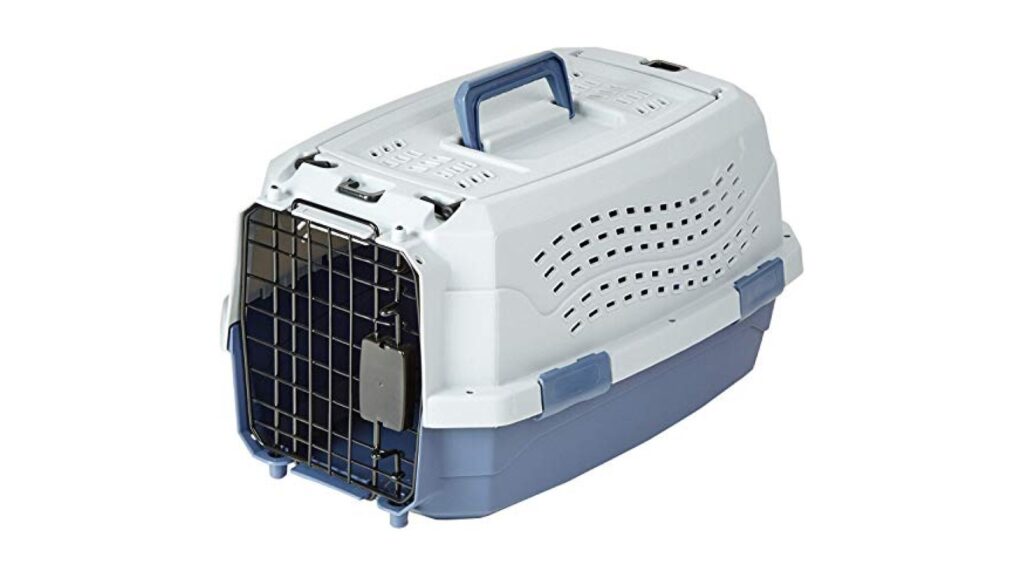
Amazon Basics 2-Door Top-Load Hard-Sided Pet Travel Carrier (19″ L)
Best for: Car trips, vet visits, and apartment cats that need one sturdy hard carrier
- Type
- Hard plastic
- Doors
- Front + top load
- Size (listing)
- About 19" L × 12" W × 11" H
- Build
- Plastic shell + steel wire door
- Best use
- Vet / car / everyday
- Cabin note
- Usually too tall/rigid for under-seat—confirm airline PDF
The Amazon Basics 2-Door Top-Load is the practical hard-carrier baseline: plastic shell, steel wire front door, and a top hatch so you are not dumping a scared cat onto a clinic table. That geometry matches what Cat Friendly practices ask clients to bring—examine in the base when possible. Pair with a familiar towel and leave the carrier out at home so it stops smelling like “only vet day.”
Pros
- Removable-style top access supports AAFP exam preference
- Easy to wipe or hose vs fabric
- Steel wire door feels escape-stiffer than zipper soft bags
- Low price for a first “real” carrier
Cons
- Bulkier to store than soft bags
- Not a flex-height cabin solution
- Hard edges need a towel liner for anxious cats
- Confirm size vs your cat’s length + standing height
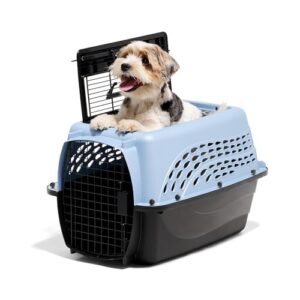
Petmate Two Door Plastic Pet Kennel (24″, Blue)
Best for: Car rides, vet visits, and households that want top + front access without cargo-crate bulk
- Line
- Petmate Two-Door
- Creators size cue
- 24in; small dogs/cats
- Doors
- Top + front access
- Job
- Car / clinic / general hard carrier
- Caveat
- Airline cargo vs cabin rules still need carrier-type checks
Petmate’s Two-Door 24″ sits in the hard-kennel middle: enough structure for car floors and many cargo checklists, with top access that soft zippers cannot match. Treat listing “airline-approved” language as a starting checklist—not a boarding pass. Confirm metal fasteners, size, and LIVE ANIMAL labeling requirements for your airline.
Pros
- Top-load for reluctant cats
- Easier clinic exams than soft bags
- Same Petmate ecosystem
Cons
- Not the cargo-kit Sky Kennel package
- Plastic still needs scrubbing after carsickness
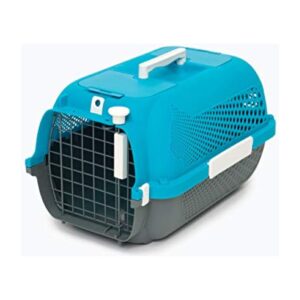
Catit Voyageur Cat Carrier, Small (Turquoise)
Best for: Car travelers who want a hard shell and a top hatch for calming pets without full unpack
- Type
- Hard plastic
- Access
- Front door + top petting hatch
- Car note
- Seatbelt loop through handle (listing)
- Hardware
- Screws or zip-tie style securing options
- Ventilation
- Side panel + door
- Best use
- Car + some air itineraries when sized
The Catit Voyageur keeps the hard-shell advantages while adding a top petting hatch—useful when you want to offer a finger rub or check breathing without swinging the whole front door open in a parking lot. Seatbelt-loop guidance on the listing is a car win; still place non-crash-tested carriers on the rear floor when you can.
Pros
- Petting hatch reduces full-door drama
- Seatbelt routing note helps car safety
- Hard shell scrubability
- Catit spare parts ecosystem somewhat available
Cons
- Small size may be tight for large adults
- Still not a soft under-seat compressor
- Colorways (turquoise) are preference-only
- Confirm airline under-seat rules separately
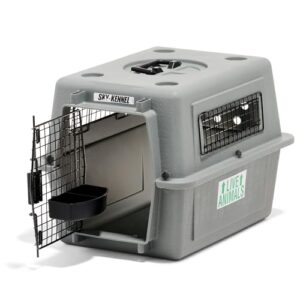
Petmate Sky Kennel for Air Travel (21″, pets up to ~15 lb)
Best for: Cargo itineraries and owners who need a kennel built around air-cargo checklists
- Type
- Hard cargo kennel
- Size class
- 21-inch; listing up to ~15 lb
- Compliance note
- Meets many IATA live-animal container expectations (verify trip)
- Kit extras
- LIVE ANIMAL stickers / travel prep items (listing)
- Material
- EcoTEC plastic (USA; recycled content claim)
- Cabin?
- No—cargo tool
If the itinerary is checked cargo, soft mesh bags are usually the wrong answer. The Petmate Sky Kennel is the hard-cargo archetype: IATA-oriented construction language, stickers, and a plastic shell handlers recognize. Cabin soft carriers and cargo kennels solve different problems—owning both is normal for frequent flyers.
Pros
- Purpose-built for cargo checklists
- Sturdy plastic / fastener culture airlines understand
- Stickers and prep items reduce last-minute scramble
- Easier to disinfect than fabric soft crates
Cons
- Wrong tool for under-seat cabin
- Heavier and bulkier to store
- Still need airline-specific confirmation
- Stress of cargo travel is a welfare decision—ask your vet
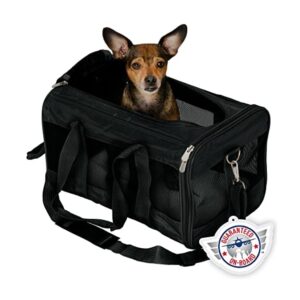
Sherpa Original Deluxe Travel Pet Carrier (Black, Medium)
Best for: In-cabin flights when your cat fits Medium and the airline allows soft carriers under the seat
- Type
- Soft-sided cabin
- Frame
- Patented spring-wire compress
- Entries
- Top + side
- Carry
- Handle + shoulder strap
- Marketing
- Airline-oriented / Guaranteed On Board program (brand)
- Best use
- Under-seat cabin
Sherpa’s Original Deluxe is why soft-sided crates dominate cabin packing lists: the spring-wire rear compresses when the under-seat pocket is stingy, and mesh keeps anxious cats from overheating in a plastic box on the jet bridge. It is still a soft bag—practice zipper discipline, and keep a hard carrier at home for clinic days.
Pros
- Compressible rear for stubborn under-seat gaps
- Lighter than hard kennels in terminals
- Mesh visibility + airflow
- Familiar brand gate agents recognize
Cons
- Zippers and fabric need inspection for escape artists
- Harder for vets to examine in-base vs hard shell
- Not a cargo kennel
- “Approved” still means check today’s airline PDF
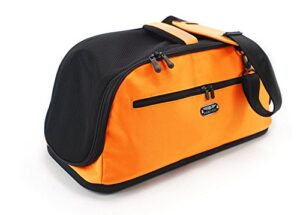
Sleepypod Air Airline Approved Cat/Dog Carrier (Orange)
Best for: Owners prioritizing soft comfort plus crash-tested car marketing for pets up to ~17.5 lb
- Type
- Soft premium / hybrid use
- Weight class
- Listing pets up to ~17.5 lb
- Safety note
- Crash-tested marketing (verify current CPS/cert claims)
- Bedding
- Machine-washable Ultra Plush
- Access
- Top + ends
- Carry
- Padded shoulder strap
Sleepypod Air is the soft-side answer when you care about car crash-tested marketing and nicer bedding, not just folding for a Boeing seat. Use it as the cabin/car soft bag; keep a hard top-load for clinics that want to remove a rigid top. Always confirm the current under-seat envelope for your airline and aircraft.
Pros
- Car + cabin dual-use positioning
- Washable plush bedding reduces “vet smell”
- Premium nylon shell
- Multiple openings for loading
Cons
- Higher price than Sherpa/Amazon Basics soft
- Still soft—zippers vs hard latch tradeoffs
- Colorways sell out; match listing
- Not a cargo IATA box
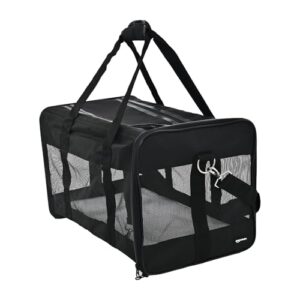
Amazon Basics Airline Approved Soft-Sided Mesh Pet Travel Carrier
Best for: Budget cabin trials and short soft-carrier errands when weight limits are modest
- Type
- Soft mesh
- Pad
- Removable washable fleece
- Openings
- Front + top zippers
- Carry
- Top handles + shoulder strap
- Ventilation
- Mesh panels
- Best use
- Budget cabin / soft trial
The Amazon Basics soft mesh carrier is the soft-side trial balloon: cheap, light, washable pad. If your cat melts down in fabric or chews mesh, you learned it without Sleepypod pricing. If they settle, upgrade the frame/compress features next.
Pros
- Low cost to validate soft-carrier tolerance
- Washable pad
- Light in airports
- Easy storage when collapsed
Cons
- Build quality below premium soft brands
- Zippers/mesh need escape-artist scrutiny
- Weak choice as sole vet carrier
- “Airline approved” still airline-specific
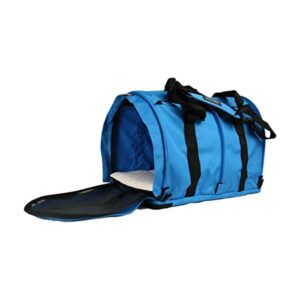
SturdiBag XL Pet Travel Carrier (Flexible Height Soft-Sided)
Best for: Frequent cabin flyers who need height flexibility and privacy control
- Type
- Soft flex-height
- Fit trick
- Flexible height for under-seat
- Privacy
- Flaps to reduce visual stimuli
- Straps
- 4-point carry + seatbelt straps
- Security
- Zipper clips
- Best use
- Cabin under-seat problem solvers
SturdiBag exists for the flyer who measured the under-seat pocket and cried: flex-height soft sides, privacy flaps, and zipper clips. It is a soft cabin specialist—not a replacement for a hard top-load on surgery-day transport.
Pros
- Height flex beats many one-size soft boxes
- Privacy flaps for overstimulated cats
- Seatbelt straps for car legs of the trip
- Clips reduce zipper blowouts
Cons
- Premium price vs Amazon Basics soft
- Still not ideal as sole clinic hard-shell stand-in
- Learning curve on flex setup
- Confirm XL vs your cat’s weight/length chart
What AAFP-style guidance says about carriers
Cat Friendly client materials emphasize a hard plastic carrier that is easy to clean, opens from the top and front, and preferably comes apart so the cat can remain in the bottom half during examination. Soft carriers, when used, should offer a large top opening and preferably dual end openings that do not collapse when open. Backpack-style carriers are discouraged for comfort and stability. Traveling on a harness alone is not considered safe transport.
Center for Pet Safety guidance commonly cited by Cat Friendly practices: belt a carrier only if it is crash-tested; otherwise place it on the rear floor. Soft premium bags like Sleepypod Air market crash testing—verify current claims before you treat any strap as a car-seat replacement.
Carrier training beats a fancier crate
Leave the carrier out as furniture, feed treats near then inside it, and cover with a towel for visual privacy on rides. Synthetic feline pheromone sprays on a towel (not soaking the plastic) are a common clinic tip. None of that requires a boarding-hotel trial—just consistent home practice. If your cat associates the box only with vaccines, the shell material will not save the appointment.
Who should buy which
- One-carrier households: Hard top-load first (Amazon Basics or Petmate Two-Door).
- Flyers: Soft cabin specialist (Sherpa / Sleepypod / SturdiBag) plus hard for land transport.
- Cargo itineraries: Sky Kennel-class hard kennel after vet consult.
- Budget soft trial: Amazon Basics soft mesh—upgrade if the cat accepts fabric travel.
What we like
- Clear hard-vs-soft decision tree for cabin, cargo, car, and vet
- AAFP/ISFM-aligned preference for removable-top hard carriers at exams
- Eight Creators-verified models with Media Library images
- Honest “airline approved” caveat—check each airline’s current PDF
- Soft-links to live gear reviews (water fountain, harness)
What we don't
- No hands-on crash or escape testing by Cats Luv Us—research_basis=literature
- Airline under-seat dimensions change; soft bags still need a tape measure
- Soft carriers can collapse at open doorways if poorly designed
- Cargo kennels are heavier and overkill for local vet trips
- Amazon colorways/sizes shift—match listing title and weight chart
Related cat gear on Cats Luv Us
Hydration gear for travel days: our best cat water fountains roundup. For supervised outdoor transitions once you arrive, see the best cat harness sets guide. Soft carriers and harnesses solve different jobs—never substitute a harness for a closed carrier in a parking lot.
Bottom line
Hard top-load for life on the ground; soft-sided crate for under-seat cabin—when the airline PDF agrees. Start with Amazon Basics or Petmate hard shells for vet/car reality, add Sherpa, Sleepypod Air, or SturdiBag when you fly, and reserve Sky Kennel for true cargo. Train the carrier at home either way.
Cat carrier vs soft-sided crate FAQ
Is a hard carrier or soft-sided crate better for cats?
Depends on the trip. Hard wins for most vet and car use; soft wins for under-seat cabin flights when sized correctly. Many owners eventually keep both.
Which carrier type do veterinarians prefer?
AAFP Cat Friendly guidance favors a hard plastic carrier with a removable top so the cat can stay in the base during exams. Soft carriers need large, non-collapsing top openings if used.
Are soft-sided carriers safe for car travel?
They can work for short rides if zippers are secure and the carrier is stable. Prefer crash-tested designs when belting in; otherwise place carriers on the rear floor. Hard shells are generally easier to secure and clean after carsickness.
What does “airline approved” actually mean?
It is marketing shorthand that a product can meet common size or construction norms. Your airline’s current pet policy and aircraft under-seat dimensions still control whether you board.
Can soft carriers go as checked cargo?
Usually no—cargo wants rigid kennels meeting live-animal container rules (e.g., Sky Kennel-class). Soft bags are cabin tools.
Did Cats Luv Us boarding-hotel test these carriers?
No. This article uses AAFP/ISFM literature, public travel-safety patterns, and Creators listings—not a hotel crash or escape trial.
How big should a cat carrier be?
Your cat should be able to stand, turn, and lie down comfortably. For cabin bags, also fit the airline’s under-seat box. For cargo, follow the airline’s kennel chart and fastener rules.
Sources
- AAFP — Getting Your Cat to the Veterinarian (carrier selection)
- AAFP — Guide to Creating a Cat Friendly Practice (carrier notes)
- 2022 ISFM/AAFP Cat Friendly Veterinary Environment Guidelines
- AAHA — A Better Cat Visit (carrier coaching)
- Center for Pet Safety — crash-tested carrier context
- Amazon Creators API catalog titles, features, and images for the eight ASINs in the product registry (partner tag catsluvus03-20)
Going away? Keep your cat's routine on track.
Cats Luv Us Boarding Hotel & Grooming in Laguna Niguel, Orange County.