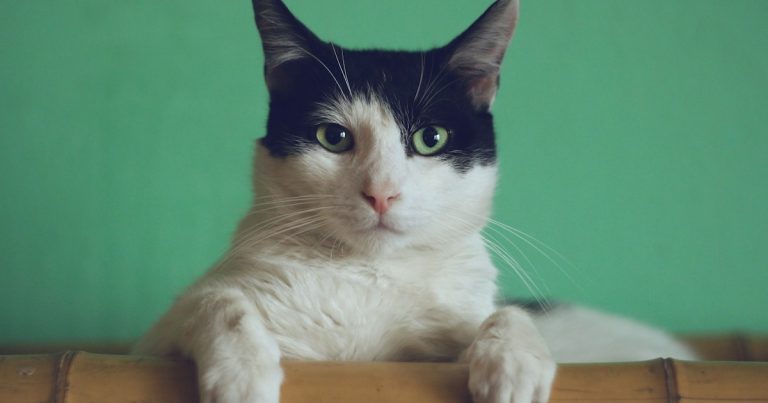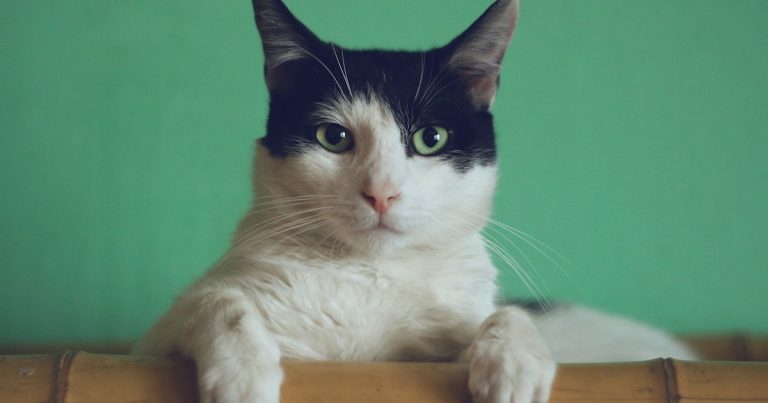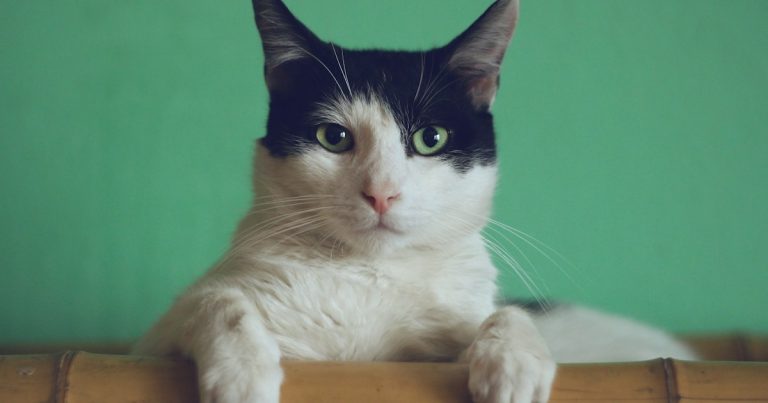
Egyptian Mau vs Tabby Cat (2026): Breed vs Pattern Explained
An Egyptian Mau is a recognized pedigree breed—often called the only natural domestic spotted cat. “Tabby” is a coat pattern (mackerel, classic, spotted, or ticked) found across many breeds and random-bred cats, including Maus whose standards describe spotted tabby markings. We compare appearance, eyes, temperament, and care using CFA/TICA literature—not boarding trials.

In this review 13 sections
CatsLuvUs Copilot Search
Ask this review — not the open web
Answers are generated from this Cats Luv Us review only. We may earn a commission from Amazon links. Not veterinary advice.
Answer from this review
This score is editorial — based on labels, recall history, and veterinary guidance, not a lab test. How we evaluated.
Choose an Egyptian Mau when you want a documented naturally spotted breed with gooseberry-green eyes and athletic enrichment needs; choose a domestic tabby companion when you want stripes or spots without pedigree scarcity or breed-level intensity on average.
Short answer: an Egyptian Mau is a recognized breed (CFA championship since 1977) often described as the only natural domestic spotted cat; a tabby is a coat pattern (mackerel, classic, spotted, ticked)—not a breed. Show Maus wear randomly spotted tabby markings in registry color language, so “Mau vs tabby” is partly a category error.
If you want the gooseberry-green, scarab-faced athlete with papers, research ethical Mau catteries and ask about health testing (including PK deficiency screening). If you want spots or stripes with a wider temperament range and usually simpler ownership, a domestic tabby (shelter or random-bred) is often the better fit. Related reading: our Ocicat vs Egyptian Mau and Bengal vs Tabby guides. Optional Amazon enrichment examples include a ~70-inch Yaheetech tree, a PetSafe Large harness, and a Nina Ottosson puzzle.
Optional gear for athletic Egyptian Mau (and spotted tabby) households
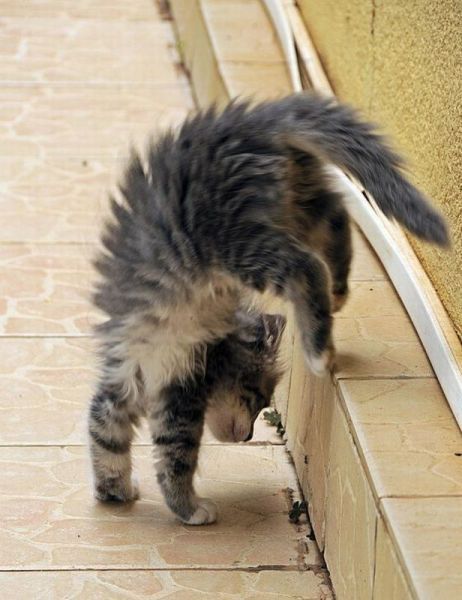
How we compared Egyptian Mau vs “tabby” (literature, not litter tests)
This is a breed-versus-pattern care and ownership guide for people who typed “Egyptian Mau vs tabby” into a search box. The Cats Luv Us Team did not board Maus and random-bred tabbies side-by-side for a scorecard. We mapped CFA and TICA Egyptian Mau materials, CFA’s tabby-pattern explainers, and high-level ownership practicality, then translated that into household questions: what you are actually comparing, spotting vs stripes, eye color, athleticism, and who should walk away.
Amazon cards below are optional enrichment gear verified through the Creators API (tag catsluvus03-20, rel="sponsored nofollow noopener").
If you already know you want a spotted breed comparison rather than pattern education, start with our live Ocicat vs Egyptian Mau guide. For another hybrid-history breed vs pattern deep dive, see Bengal vs Tabby.
The key point: Egyptian Mau is a breed; tabby is a pattern
If you remember one sentence from this article, make it this:
- Egyptian Mau — a recognized pedigree breed with a written standard, registration pathway, and a “natural spotted domestic” breed story (CFA registration 1970; championship 1977).
- Tabby — a coat pattern (and the genetics that paint it), not a breed. CFA’s coat-color materials say it outright: descriptors like tabby, calico, and tortoiseshell describe the coat, not the breed.
That is why the comparison feels uneven. Asking “Egyptian Mau vs tabby” is a bit like asking “Siamese vs pointed”—one label is a breed package; the other is a marking style that can show up on many breeds. In fact, TICA’s Egyptian Mau color language lists bronze and black silver spotted tabby (plus black smoke). A show Mau can be a tabby in pattern language while still being 100% a Mau as a breed.
When people say “I want a tabby,” they usually mean a domestic cat with stripes, swirls, or spots and an “M” on the forehead—often a shelter or random-bred companion. When people say “I want an Egyptian Mau,” they mean a specific breed look (gooseberry-green eyes, random spots, athletic build) and usually a specific energy budget.
Egyptian Mau origins (literature-accurate, no invented %)
CFA’s breed story ties the Mau’s look to spotted cats depicted in ancient Egyptian art, then jumps to the modern Western breeding program. The practical milestone for U.S. fanciers: Russian princess Nathalie Troubetskoy brought three Maus to the United States in 1956 and founded a breeding program. CFA accepted the breed for registration in 1970 and advanced it to championship in 1977.
Both CFA and TICA describe the Egyptian Mau as the only natural domesticated breed of spotted cat—meaning the spots are not the product of a modern wild × domestic hybrid program like the early Bengal generations, and not the domestic hybrid lineage that produced the Ocicat. That slogan is breed literature, not a DNA percentage chart. We will not invent tidy “ancient blood %” memes for shoppers.
What we will not do: claim every spotted shelter cat is “part Mau,” invent temperament percentages, or treat Pharaoh frescoes as a kitten sales calculator. Ask the breeder for registration papers, not viral ancestry stories.
Appearance: random Mau spots vs everyday tabby markings
Side-by-side, the tells are usually spot quality + eye color + body mechanics—not whether someone can say the word “tabby.”
| Trait | Egyptian Mau (breed) | Domestic “tabby” (pattern) |
|---|---|---|
| What the label means | Pedigree breed with standard | Coat pattern on any breed or mix |
| Body | Medium, muscular, graceful; longer hind legs; tip-toe stance; loose flank skin flap | Anything from petite DSH to large mix—no single body type |
| Coat / pattern ideal | Random distinct spots of varied size/shape; good contrast; broken necklaces; dorsal stripe; vest-button belly spots | Mackerel, classic bullseye, spotted, or ticked—often softer contrast; spotted types may look like organized broken stripes |
| Face | Forehead “M” / frown marks; mascara lines; worried brow; almond gooseberry-green eyes | Typical domestic tabby “M” and mascara; eye color varies widely |
| Show colors (CFA) | Silver, bronze, smoke (black/dilute may register, not show) | Brown, silver, orange, blue tabbies, patched, and more |
CFA’s pattern language wants torso spots that are random and distinct, not penciled into tidy rows. It penalizes solid underside stripes instead of “vest button” spots, missing broken necklaces, and eye color that fails to show green on the standard’s age timeline. That is the educational punchline: Maus wear a specialized spotted-tabby expression engineered for a wild silhouette—not “any cat with spots.”
Gooseberry-green eyes and the athletic build
Eyes: “Gooseberry green” is not poetic filler—it is scored color language. Standards allow kitten eye color to change, expecting some green by about eight months and full green by about 18 months. Preference always leans greener. An adult marketed as a Mau with settled gold or copper eyes is not meeting the breed’s signature trait.
Build mechanics: longer hind legs create the famous tip-toe stance; a loose skin flap from flank to hind leg supports the breed’s leaping reputation; high shoulder blades contribute to a cheetah-like gait in CFA’s description. Those are structural notes from standards and breed pages—not invented boarding stopwatch times.
Temperament, athleticism, and enrichment needs
CFA describes Egyptian Maus as exceptionally intelligent, intensely devoted to their people, acutely aware of their environment, and often reserved or selective with strangers. They enjoy interactive games, may train you for fetch, and frequently like harness walks. Voices tend to be quiet and melodious—chirps and chatters more than endless Siamese continuous commentary. Individuals still vary; we are not inventing “85% affectionate / 15% aloof” charts.
A domestic tabby companion might be a chill sofa philosopher, a curtain climber, or anything in between. Pattern does not predict energy. Comparing “Mau energy” to “tabby energy” only works if you remember the second group is a giant mixed bag.
Practical takeaway: plan Mau care around daily interactive play, tall vertical routes, and brain work. The same enrichment helps many spotted tabbies—but skipping it on a Mau is how blinds get shredded.
Lookalikes, scarcity, and ownership practicality
Domestic tabby companions—including gorgeous spotted ones—are ordinary pet cats under nearly all U.S. frameworks and are abundant in shelters. Documented Egyptian Maus are a different logistics problem: fewer ethical catteries, wait lists, and a market full of “Mau mix” ads that really mean “spotted domestic shorthair.”
- Ask for association registration pathway and pedigree—not vibes and a forehead “M.”
- Expect to wait for a reputable litter; impulse “Egyptian Mau” marketplace listings are often lookalikes.
- Landlords and insurers care about pets generally; this is usually not a hybrid-statute maze like early-generation Bengals, but paperwork still matters.
- If you want another spotted breed option with different origins, compare the Mau with the Ocicat rather than with “tabby.”
Ordinary domestic tabbies skip the scarcity tax. That alone is a practical reason many households should choose a shelter spotted or striped companion over a rare-breed chase.
Care differences that actually matter
Both need food, litter, veterinary care, and love. The delta is mostly athleticism + brain + provenance:
- Vertical space: tall trees, shelves, and scratch posts. A ~70-inch class tower (Yaheetech example or Heybly 71-inch) is a starting point, not the whole gym.
- Daily interactive play: wand toys, fetch, training sessions—budget time, not only money.
- Puzzle feeders: hunt-simulate meals (Nina Ottosson Buggin’ Out class puzzles).
- Optional leash work / secure outdoors: carefully trained harness walks (PetSafe Large / vest-style rabbitgoo) or a catio—never unsupervised free roam in suburbia.
- Grooming: Mau coats usually need light weekly brushing; tabbies vary by coat length.
- Veterinary partnership: ordinary feline wellness plus honest breeder conversation about genetic testing (PK deficiency screening appears in CFA’s own breed notes). We are not listing treatments as “Mau medicine.”
- Diet: feed a complete feline diet appropriate to life stage per your veterinarian—ignore social-media dogma that skips balanced nutrition.
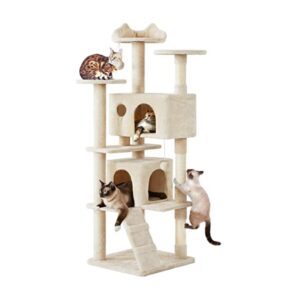
Yaheetech 70in Multi-Level Sturdy Cat Tree
Best for: Indoor Siberian households that need height and scratch posts in one footprint
- Height class
- ~70 in multi-level
- Creators brand
- Yaheetech
- Use case
- Vertical play + perch + sisal scratch
Yaheetech’s ~70-inch multi-level tree () is here as vertical territory, not as a breed product. CFA and TICA Mau writing flags athleticism, leaping, and a loose flank skin flap as breed hallmarks—trees help channel that drive indoors. This Creators-verified tower stacks condos, perches, sisal posts, and hanging toys into one footprint.
Read the weight guidance on the carton before you assume it is for a heavy adult. Bolt or wedge unstable trees, and pair furniture with daily wand play—trees alone do not burn Mau energy. Many ordinary spotted tabbies enjoy the same height; the difference is how often a bored Mau invents parkour without it.
Pros
- Height suits a powerfully built, high-jumping forest type
- Useful enrichment for both sexes; boredom is not a male-only problem
- Media already in library from prior breed-care reviews
Cons
- Confirm base stability on your floor type; large males need secure footing
- Not a substitute for interactive play sessions
- Assembly required; measure ceiling clearance
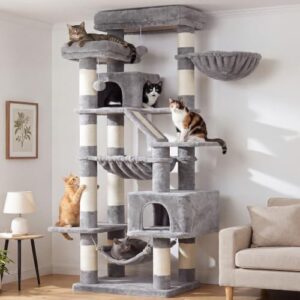
Heybly Cat Tree, 71-Inch-Tall Tower (HCT034W)
Best for: Owners comparing a second tall-tree ASIN for base size, color, or stock
- Listed height
- About 71 in
- Perches
- 2 perches (listing)
- Extras
- Hanging pompoms / toys
- Assembly
- Universal screws; listing emphasizes sturdy base
Heybly’s 71-inch HCT034W () is a second tall-tower example so shoppers are not stuck on a single SKU. Creators listing copy highlights multi-level climbing, hanging toys, and a base meant for large indoor cats.
For Mau (or high-energy spotted tabby) planning, think in circuits: tree → window perch → scratcher → puzzle. One tower is a start; bored athletes invent parkour on fridge tops and drapes.
Pros
- Comparable height to other ~70-inch class trees
- Simple multi-level layout for climbing circuits
- Easy-clean marketing for fur-heavy households
Cons
- Still mass-market furniture—inspect joints after a powerful launch
- Two perches may feel sparse for multi-cat homes
- Not a medical or behavioral therapy device
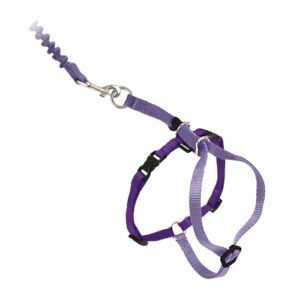
PetSafe Come With Me Kitty Harness and Bungee Leash (Large, Lilac)
Best for: Cats that hate bulky vests; owners who will obsess over girth fit and indoor training
- Type
- H-style harness + bungee leash
- Leash
- Bungee / shock-absorbing lead
- Fit cues (maker)
- Girth behind front legs; O-ring on ribcage; chest slide off the throat
- Wear note (maker)
- Do not leave harness on when not in use
PetSafe Come With Me Kitty (Large) () is a classic cat harness + bungee leash pairing. CFA breed writing notes many Egyptian Maus enjoy walking on a harness and leash—but only after positive indoor fitting sessions, and only where it is safe.
This is optional enrichment gear, not a requirement of the breed standard. If your cat panics or slips the harness, stop and rethink (vest-style options below, or a secure catio instead of sidewalk time).
Pros
- Minimal fabric—often better tolerated than heavy vests
- Bungee lead softens sudden jolts
- PetSafe publishes clear fit/acclimation steps
- Long-running SKU with multiple size/colorways
Cons
- Thin straps = less escape margin if girth loosens
- Head-loop dressing still bothers some cats
- Creators feature bullets are thin—read PetSafe size chart carefully
- Not a substitute for a wrap/vest on dedicated Houdini cats
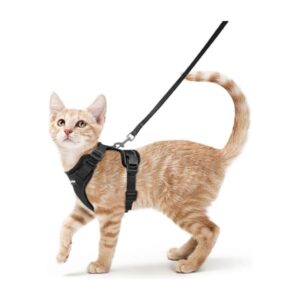
rabbitgoo Cat Harness and Leash Set, Escape Proof Vest
Best for: Owners whose cat backs out of simpler strap harnesses during training
- Fit band (listing)
- Neck ~8.5–11 in; chest ~11.8–18.1 in (verify size chart)
- Style
- Vest / air-mesh
- Leash attachment
- Reinforced back D-ring
rabbitgoo’s escape-oriented vest harness () is the alternate when a slim H-harness slides off a determined athlete. Creators listing emphasizes soft air-mesh, four adjustable straps, and a back D-ring.
Affiliate honesty: we are not claiming this product is designed for Egyptian Maus. Measure your cat, practice indoors, and treat every outdoor minute as supervised.
Pros
- Vest coverage harder to wriggle out of than minimal straps for some cats
- Breathable mesh for warm climates
- Four-point adjustability
Cons
- Size chart may still be small for the largest males—measure twice
- No harness is truly escape-proof if poorly fitted
- Outdoor walks remain a judgment call around roads, dogs, and wildlife
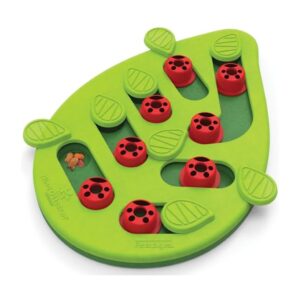
Catstages Nina Ottosson Buggin’ Out Puzzle & Play
Best for: Smart Sibs that invent trouble when under-stimulated
- Style
- Level-2 sliding treat puzzle
- Creators brand
- Catstages / Nina Ottosson
- Use case
- Solo enrichment between play sessions
Nina Ottosson Buggin’ Out () is a Level-2 cat puzzle feeder under the Catstages line. Egyptian Maus are routinely described as intensely aware hunters who enjoy interactive games; a puzzle that holds about a quarter cup across many compartments is a practical, low-cost way to burn brain energy indoors.
Use it as part of a rotation with wand play and climbing—not as the only enrichment. Skip if your veterinarian has prescribed a strict measured diet you cannot portion into puzzles safely. Plenty of domestic spotted tabbies love puzzles too—the Mau case is about intensity and consistency, not exclusivity.
Pros
- Matches “intelligent problem-solver” breed marketing with an actual toy, not a myth
- Useful for males and females alike
- Portion treats so puzzle calories do not silently fatten a slow-maturing large breed
Cons
- Some cats flip the whole board—supervise early sessions
- Not a substitute for human interactive play
- Choking risk if plastic breaks—inspect regularly
Who should consider an Egyptian Mau vs a domestic tabby
| Profile | Lean Egyptian Mau? | Lean domestic tabby? |
|---|---|---|
| First-time cat owner | Usually no (unless enrichment-ready) | Yes — wider temperament range |
| Wants gooseberry-green spotted athlete; has time/budget; can verify papers | Maybe | Also fine if open to lookalikes |
| Wants spots this month from a shelter | Poor fit | Yes |
| Apartment with weak enrichment plan | No | Only with a real enrichment plan |
| Budget is adoption + basic gear | Poor fit (cattery prices) | Yes |
| Allergic-to-boredom athlete household | Strong candidate | Pick a high-energy individual |
Bottom line: pick an Egyptian Mau when you want a specific naturally spotted breed package and can support it. Pick a domestic tabby when you want stripes or spots without pedigree scarcity or breed-level intensity on average.
Cost, lifespan, and soft health notes
Mau purchase prices swing with cattery reputation, color, and region; they commonly dwarf adoption fees for a shelter tabby. We will not invent dollar figures that go stale by next season—ask multiple reputable breeders for current ranges and what is included (registration, vaccines, spay/neuter contracts, transport).
Lifespan chatter for both groups often lands in the teens with solid care, but that is not a warranty. CFA frames the Mau as a generally healthy natural breed while noting breeder diligence around heritable conditions such as pyruvate kinase deficiency (anemia risk) and mentioning urolithiasis as another condition that may occur. UC Davis lists Egyptian Mau among breeds appropriate for PK genetic testing. Some Mau breed-club discussion has argued that clinical disease in known K/K Maus appears limited—so the honest move is ask for testing results and talk to your vet, not panic-scroll.
Marketing that promises mystical “ancient vigor” or disease-proof status is a red flag. Conversely, fear blogs that treat every Mau as a fragile exotic ignore decades of responsible association breeding.
What we like
- Leads with breed-vs-pattern clarification searchers actually need
- Appearance and eye-color language anchored to CFA/TICA standards
- Separates scarab folklore from written facial-marking standards
- Soft PK-deficiency note without fearmongering
- Care section tied to enrichment products you can actually buy
What we don't
- Individual domestic tabbies vary more than any single “tabby personality” claim
- Affiliate ASIN set is enrichment gear, not Mau-specific medical products
- Lookalike spotted DSH cats are common—papers still matter
Egyptian Mau vs Tabby — FAQ
Is a tabby a breed or a pattern?
A pattern. CFA’s coat and color materials state clearly that tabby describes markings on the coat—not a breed. The four main patterns are mackerel, classic (blotched), spotted, and ticked. You can have a tabby Maine Coon, a tabby American Shorthair, or a random-bred brown tabby from the shelter.
Is an Egyptian Mau just a fancy spotted tabby?
No—as a breed. The Egyptian Mau is a CFA/TICA-recognized pedigree with a written standard, registration pathway, and “natural spotted” breed story. Yes—in coat language: Mau standards describe randomly spotted markings using tabby pattern vocabulary (TICA lists bronze / black silver spotted tabby and black smoke). Spots alone do not make a shelter cat a Mau.
What eye color should an Egyptian Mau have?
CFA and TICA call for gooseberry green. Standards allow changing eye color in kittens, with some discernible green by about eight months and full green by about 1½ years (18 months). Preference goes to greener eyes. Adult gold, copper, or blue eyes are not the breed ideal (blue eyes are a CFA disqualification).
What is the “scarab” marking on an Egyptian Mau?
It is breed marketing and some association language for the forehead “M” plus frown marks that continue between the ears. CFA’s written standard describes the “M” and frown lines; TICA’s breed introduction often calls that “M” the mark of the scarab; GCCF explicitly mentions a complex scarab design on top of the head. Folklore links it to ancient Egypt—the marking itself is a real facial tabby feature, not a separate mystical breed.
How do you tell a Mau from an ordinary spotted tabby?
Stack signals: random, distinct spots of varied size/shape (not tidy vertical broken-stripe rows), gooseberry-green eyes in adults, mascara lines and a worried brow, broken necklaces, dorsal stripe to a banded dark-tipped tail, “vest button” belly spots, longer hind legs with a tip-toe stance, and a loose flank skin flap. Then ask for papers. Appearance without pedigree is a lookalike guess.
Do Egyptian Maus need special enrichment?
Yes for most households—daily interactive play, tall climbing furniture, and food puzzles are baseline. CFA notes fetch games and harness walks as common enjoyments. Optional Amazon examples we verified via Creators: tall ~70-inch trees, Large cat harnesses for trained walks, and Level-2 puzzle feeders. Many spotted tabbies enjoy the same gear; Maus more often require consistent outlets.
What about pyruvate kinase (PK) deficiency in Egyptian Maus?
CFA notes breeders have been diligent about genetic testing for heritable conditions such as pyruvate kinase deficiency, which can cause anemia. UC Davis lists Egyptian Mau among breeds appropriate for PK testing (autosomal recessive; N/N clear, N/K carrier, K/K potentially affected). Some Mau breed-club writing has discussed limited clinical evidence of disease in known K/K Maus—so ask your breeder for current testing practices and talk to your veterinarian, rather than panicking from a single blog headline.
Should a first-time owner get an Egyptian Mau or a domestic tabby?
Most first-time owners are better matched to a domestic tabby (or another moderate-energy companion) unless they already understand athletic enrichment, budget for a reputable Mau cattery, and want a specific breed package. Maus can be wonderful family cats—just not “set and forget.”
Sources
- CFA — Egyptian Mau breed page (Troubetskoy 1956 import; CFA registration 1970, championship 1977; temperament; random spots; gooseberry-green eyes; PK deficiency / urolithiasis notes): cfa.org/breed/egyptian-mau
- CFA Egyptian Mau Breed Standard PDF — pattern, eye-color timeline, penalize/DQ language: egyptian-mau-standard.pdf
- TICA — Egyptian Mau breed overview (natural spotted; gooseberry green; scarab “M”; tiptoe stance; skin flap): tica.org/breed/egyptian-mau
- TICA Egyptian Mau (EM) standard PDF — spotted tabby / silver-smoke divisions; eye-color allowances: tica.org EM standard
- CFA Cat Talk — “Patterns in the Domesticated Cat – Part 2 Tabby Patterns” (mackerel, classic, spotted, ticked): cfa.org/cat-talk/domestic-cat-patterns-2-tabby
- CFA — Coat & Color Descriptions (“tabby is a pattern — not a breed”): cfa.org/coat-color-descriptions
- UC Davis Veterinary Genetics Laboratory — Erythrocyte Pyruvate Kinase Deficiency (Egyptian Mau listed among breeds for testing): vgl.ucdavis.edu/test/pk-deficiency-cat
- Related Cats Luv Us Reviews — Ocicat vs Egyptian Mau; Bengal vs Tabby (breed-vs-pattern sibling)
- Amazon Creators API — product titles/images for enrichment ASINs , , , , (partner tag catsluvus03-20)
Going away? Keep your cat's routine on track.
Cats Luv Us Boarding Hotel & Grooming in Laguna Niguel, Orange County.