Korat vs Russian Blue (2026): Coat, Temperament & Fit
Both breeds wear exclusive silver-blue coats and green eyes—but Korats and Russian Blues are not the same cat. We compare Thai heart-face origins, coat texture, build, temperament, grooming, and fit using CFA/TICA literature, not boarding trials.

In this review 10 sections
CatsLuvUs Copilot Search
Ask this review — not the open web
Answers are generated from this Cats Luv Us review only. We may earn a commission from Amazon links. Not veterinary advice.
Answer from this review
This score is editorial — based on labels, recall history, and veterinary guidance, not a lab test. How we evaluated.
Pick the Korat if you want a Thai silver-halo blue with a heart-shaped face, oversized luminous green eyes, and an expressive, attention-seeking companion; pick the Russian Blue if you want an elegant Archangel plush double coat and a quieter cat that warms up once trust lands—both trend intelligent and green-eyed in literature.
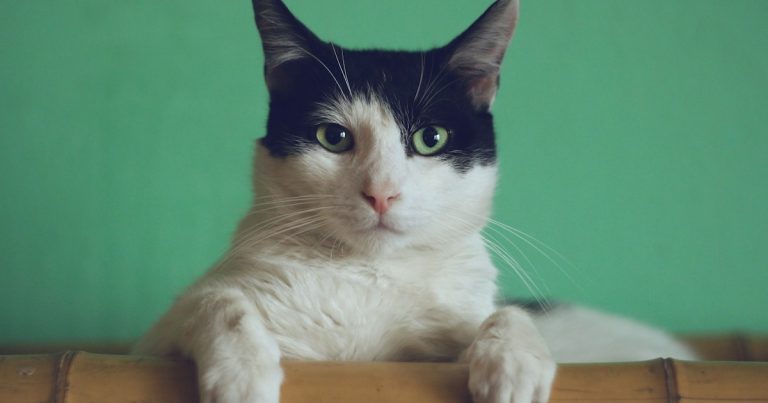
Short answer: the Korat is Thailand’s Si-Sawat good-luck blue—heart-shaped face, oversized luminous green eyes, semi-cobby coiled-spring body, and a short glossy single coat with a silver “halo.” The Russian Blue is the Archangel elegant—modified wedge, large wide-set ears, vivid green eyes, and a plush double coat with silver-tipped guard hairs that leave finger footprints.
Neither breed is a Chartreux (we already published that comparison separately). Registration—not coat color alone—proves pedigree. We do not invent genetic percentages or claim boarding side-by-side tests. Optional Creators-verified gear includes a Hertzko slicker, a stainless comb, and a soft donut bed.
Optional gear for silver-blue households
How we compared Korat vs Russian Blue (literature, not litter tests)
This is a breed comparison and care guide for people shopping exclusively silver-blue shorthairs and wondering whether Thailand’s Korat and the Russian Blue are interchangeable. The Cats Luv Us Team did not board Korats and Russian Blues side-by-side for a scorecard. We mapped CFA and TICA breed pages, CFA’s Cat Talk blue-breed identification guide, and published Korat history notes, then translated that into household questions: origins, build, coat, head and eyes, temperament, grooming, and who should walk away.
We already published a separate Chartreux vs Russian Blue guide for the French woolly blue. This piece is Korat-focused—heart-shaped face, single silver-halo coat, Thai good-luck folklore—not a rewrite of that Chartreux article.
Amazon cards below are optional gear verified through the Creators API (tag catsluvus03-20, rel="sponsored nofollow noopener").
Origins: Thai Si-Sawat vs Archangel elegant
Korat. CFA presents the Korat as a rare natural Thai breed—known in its homeland as Si-Sawat—with the earliest known record in the Cat-Book of Poems (Smud Khoi of Cats) from the Ayudhya period (1350–1767). Thai tradition frames Korats as good-luck cats traditionally given to brides. Jean Johnson imported the first pair to the United States in 1959; Daphne Negus later brought additional cats from Thailand. CFA accepted the breed for championship in 1966. Color is silver-tipped blue only; no other color is a Korat.
Russian Blue. CFA and TICA materials place origins with the Archangel (Arkhangelsk) cats of northern Russia—sailors reputedly carried them west. Early English shows lumped blue shorthairs together; Scandinavian breeders carried the breed through the early 20th century and wartime bottlenecks; U.S. breeders later combined English and Scandinavian lines into the modern Russian Blue. Show color is blue only in CFA.
What we will not do: invent “% Thai” or “% Russian” DNA pie charts, claim either breed is a Chartreux, or sell viral hypoallergenic guarantees. Coat color alone does not prove pedigree—ask for registration pathway.
Build, coat, and face hallmarks
Both breeds are blue-only in mainstream CFA presentation and both mature toward green eyes. The useful splits are silhouette, coat structure, and head shape—not a fantasy weight warranty.
| Trait | Korat | Russian Blue |
|---|---|---|
| Origin story | Thai Si-Sawat / Korat province; Smud Khoi good-luck cat | Archangel / northern Russia lines via Europe |
| Build tendency | Semi-cobby; broad-chested; coiled-spring heft; unexpected weight | Long, lithe, fine-boned; long legs; graceful outline |
| Head / ears | Heart-shaped face; large flared ears set high | Modified wedge; large pointed ears set wide; flat two-plane profile |
| Eyes | Oversized luminous green (peridot); amber cast OK; mature 2–4 yrs | Rounded aperture; vivid green at maturity |
| Coat | Short glossy single; close-lying; silver halo / sea-foam sheen | Short dense plush double; silver-tipped guard hairs; finger footprints |
| Color framing | Silver-tipped blue all over; roots lighter, tips silver | Even bright blue; lighter shades often preferred; distinct tipping contrast |
| Adult size (literature bands) | Males may match or exceed ~10 lb; females usually smaller; slow maturity (2–4 years) | Males rarely over ~10 lb in CFA notes; females often ~5–8 lb |
| Coat care | Light weekly brushing (CFA); single coat sheds lightly | Light combing often enough (CFA: a few times monthly for many coats) |
Treat published weight bands as tendencies. A well-fed Korat female and a large Russian Blue male can overlap on the scale—type and coat still separate them on the judging table. Both green-eyed adults can confuse newcomers; the heart face vs wedge and single vs double coat are the tell.
Temperament and household fit
Breed literature leans intelligent and people-oriented for both—but the social flavor differs. CFA paints Korats as energetic (not hyperactive), deeply bonded, expressive communicators who want to be head of the family and need interactive toys, puzzles, and attention. Russian Blues are cast as clever, soft-voiced, and sometimes reserved until they decide you are safe; CFA notes they may hide under the sofa when guests arrive, then investigate, and often prefer quieter environments.
Patterns that show up again and again in reputable explainers:
- Strangers: Korats often investigate company; Russian Blues more often keep a polite distance until trust lands.
- Voice: Korats can make a wide range of noises when they want something; Russian Blues trend quieter than Oriental breeds.
- Play: Korats take interactive play seriously and crave stimulation; Russian Blues invent games with drawers, puzzle feeders, and interactive toys.
- Attention: Korats may show jealousy if a new pet displaces their focus—CFA advises keeping them in the “head of family” role during introductions.
- Routine: Russian Blues frequently prefer predictable, quieter households; Korats thrive when their people are available and engaged.
- Kids & pets: both can share homes with respectful older children and cat-friendly dogs when introductions are calm—supervision still matters.
None of that licenses “always lap cat” sales talk or “aloof blue statue” fearmongering. Interview the breeder about this kitten’s parents, early handling, and return policy.
Grooming, enrichment, and daily care
Care math for these silver-blues is mostly coat + brain + calm-or-interactive space:
- Comb / brush: Korat single coats benefit from light weekly brushing; Russian Blue plush usually needs lighter, consistent passes. Creators-verified examples: Hertzko slicker and Cafhelp stainless combs.
- Soft beds: both breeds often enjoy defined nap cups—Bedsure 20-inch donut or a slightly larger Best Friends by Sheri 23-inch.
- Enrichment: puzzle feeders and wand play for clever indoor cats (Nina Ottosson Buggin’ Out)—non-negotiable for attention-hungry Korats.
- Vertical space: shelves and a modest tree still help even “quiet” Russian Blues survey the room.
- Allergen honesty: CFA notes Korat hair may not float as much when stroked, which can feel more tolerable for occasional allergic visitors—but that is not a low-allergen breed warranty.
- Veterinary partnership: ordinary feline wellness plus any line-specific screening your breeder recommends. We will not invent breed disease percentages.
- Diet: complete feline diet appropriate to life stage per your veterinarian. CFA flags Russian Blues’ large appetites and obesity risk without interactive exercise.
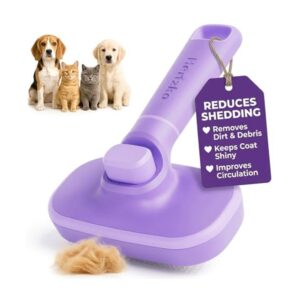
Hertzko Self Cleaning Slicker Brush for Dogs and Cats
Best for: Households managing spring/fall Siberian coat blowouts
- Style
- Self-cleaning slicker (retractable bristles)
- Creators brand
- Hertzko
- Use case
- Loose hair / light detangle on semi-long triple coats
Hertzko’s self-cleaning slicker () is here as a coat-maintenance tool, not a breed-branded product. CFA notes Korats need only light weekly brushing on their glossy single coat; Russian Blues often need lighter, consistent passes for seasonal undercoat. A gentle weekly slicker pass pulls loose hair before it coats the sofa.
Keep pressure light—especially on the finer Korat single coat—and finish with a comb through the ruff and behind the ears where plush Russian Blue coats can knot seasonally.
Pros
- Push-button retract helps dump hair into the trash without picking bristles by hand
- Useful on both male and female Siberians—coat structure is not sex-specific in CFA standards
- Creators-verified image already in Media Library for honest affiliate linking
Cons
- Angled pins can scratch thin skin if you press hard—use light strokes
- Not a dematting rake for neglected knots; pair with a metal comb
- Grooming gear, not a medical or allergen-reduction product

Cafhelp 2 Pack Dog Combs with Rounded Ends Stainless Steel Teeth
Best for: Owners who already brush but still find tangles in high-friction zones
- Style
- Stainless steel comb, rounded tips (2-pack)
- Creators brand
- Cafhelp
- Use case
- Finish pass after slicker; find hidden mats
Cafhelp’s 2-pack stainless comb set () is the finish tool after a slicker pass. CFA’s Korat grooming note is weekly brushing for bond and shine; CFA’s Russian Blue care notes lean toward light combing a few times a month for many coats—individuals and seasons vary.
Use the finer spacing around the Korat’s heart-shaped muzzle and oversized eyes; save broader strokes for the Russian Blue body where plush density leaves finger “footprints.” Affiliate honesty: this is ordinary pet grooming hardware, not a show-grooming system.
Pros
- Rounded tips are gentler than sharp dematting blades for routine checks
- Two-pack means one bathroom comb and one travel/backup
- Pairs cleanly with CFA’s advice to feel underside, tail, and britches several times per week
Cons
- Will not replace professional dematting if a coat is severely neglected
- Larger males can be harder to wrangle for rear-end work—patience and treats help
- Not an allergy or medical device
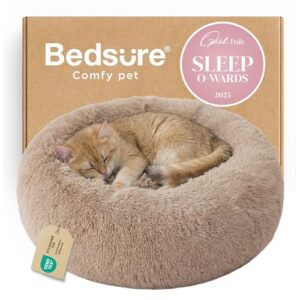
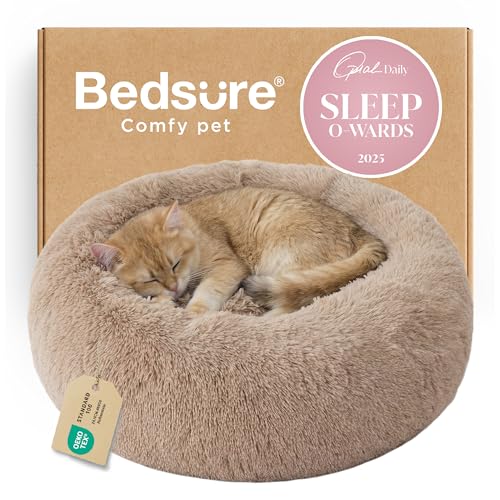
Bedsure Calming Cat Beds Donut Round Washable Kitten Bed, 20 inches Camel
Best for: Households that want a washable dedicated nap spot
- Size
- 20 in round donut (listing size)
- Creators brand
- Bedsure
- Use case
- Washable soft nest
Bedsure’s 20-inch calming donut () is optional comfort gear for breeds often kept as indoor companions. Place it near a window perch—or away from the loudest doorway if you have a stranger-shy Russian Blue. Korats who shadow you may still prefer your lap over any bed; that is a temperament feature, not a product failure.
Wash on a pet-safe cycle when silver-blue undercoat blooms. A bed does not replace daily interaction or vertical space.
Pros
- Washable cover helps with seasonal shed hair piles
- Works for either sex; pick based on the cat’s preferred loaf shape, not stereotypes
- Reusable Media Library asset
Cons
- Very large males may overflow a 20-inch nest—watch fit as they mature to 3–5 years
- Some cats ignore beds and claim keyboards instead (CFA owners know this plot)
- Not orthopedic medical equipment
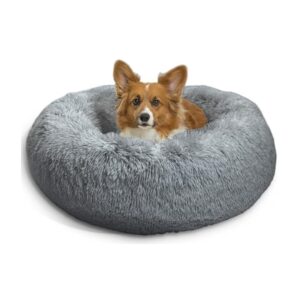
Best Friends by Sheri Original Calming Donut Dog Bed, Gray, Small, 23″
Best for: Owners comparing a slightly larger gray donut for medium silver-blue cats
- Listed size
- Small / about 23 in
- Color (checked)
- Gray
- Fill note
- High-loft polyfill (listing)
Best Friends by Sheri’s 23-inch Original Calming Donut () is the upsized alternate when a smaller cup looks cramped on a surprising-heft Korat. Creators listing emphasizes plush shag and a bolstered ring.
We are not claiming breed-specific design—just a Creators-checked soft bed option that matches the indoor lifestyle both breeds are often sold into.
Pros
- Extra diameter vs many 20-inch kitten donuts
- Deep bolster for curl-and-bury naps
- Gray color hides blue shed reasonably well
Cons
- Marketed as a dog bed size—confirm your cat actually uses bolsters
- Shag covers need regular vacuuming/washing
- Still enrichment-adjacent, not behavior therapy
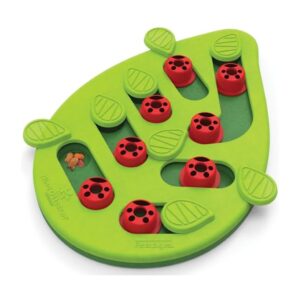
Catstages Nina Ottosson Buggin’ Out Puzzle & Play
Best for: Smart Sibs that invent trouble when under-stimulated
- Style
- Level-2 sliding treat puzzle
- Creators brand
- Catstages / Nina Ottosson
- Use case
- Solo enrichment between play sessions
Nina Ottosson Buggin’ Out () is a Level-2 cat puzzle feeder under the Catstages line. CFA paints Korats as stimulation-craving problem-solvers and Russian Blues as mechanical-aptitude champs who open drawers; a quarter-cup puzzle is cheap insurance against boredom shredding.
Use it in rotation with wand play—especially for Korats, who literature frames as demanding interactive attention, and for Russian Blues, who often treat closed cabinets as puzzles.
Pros
- Matches “intelligent problem-solver” breed marketing with an actual toy, not a myth
- Useful for males and females alike
- Portion treats so puzzle calories do not silently fatten a slow-maturing large breed
Cons
- Some cats flip the whole board—supervise early sessions
- Not a substitute for human interactive play
- Choking risk if plastic breaks—inspect regularly
Who should choose which
| Profile | Lean Korat? | Lean Russian Blue? | Consider another breed? |
|---|---|---|---|
| Wants Thai heart-face + single silver-halo coat | Usually yes | No (different head/coat story) | — |
| Wants plush double coat + Archangel elegant type | No | Usually yes | — |
| Wants woolly French blue + copper/gold eyes | No | No | Yes — see our Chartreux vs Russian Blue guide |
| Can give daily interactive play / “head of family” attention | Usually yes | Helpful but less mandatory | — |
| Many rotating guests / noisy hallway | Often more investigative | Only with calm intros / escape perches | Maybe |
| Quiet apartment; values routine | If you are home and engaged | Often an excellent match | — |
| Expecting guaranteed hypoallergenic blue cat | Wrong aisle | Wrong aisle | Talk to an allergist; no breed is a warranty |
Bottom line: choose Korat for the Thai silver-halo blue with a heart-shaped face and an expressive, attention-seeking companion style. Choose Russian Blue for the Archangel elegant with plush silver sheen and a quieter warm-up curve. Both are specialist silver-blue companions compared with a random-bred brown tabby—budget for enrichment and grooming tools, not only the purchase price.
Cost, lifespan, and health honesty
Purchase prices swing by cattery reputation, sex, and region. We will not invent dollar figures that go stale by next season—ask multiple CFA- or TICA-oriented breeders for current ranges and what is included (registration, spay/neuter contracts, vaccines, transport). Korats remain relatively rare; waiting lists are common.
TICA notes considerable longevity for many Korats with solid care; pet-media lifespan bands for Russian Blues often land roughly mid-teens—those are not warranties. Work with your veterinarian on ordinary feline wellness plus any line-specific screening your breeder recommends. “Hypoallergenic blue cat” marketing is a red flag—individual allergen load varies.
What we like
- Clear origin and type split: Thai Korat vs Archangel Russian Blue—no invented DNA pie charts
- Coat, head, and eye hallmarks anchored to CFA’s Got the Blues ID guide plus breed pages
- Temperament framed as literature tendencies with a household-fit table (Korat attention vs RB reserve)
- Thin affiliate set matches grooming + soft beds + enrichment for indoor silver-blues
What we don't
- Individual cats vary more than breed labels imply
- Affiliate ASINs are general pet products, not breed-medical devices
- Secondary lifespan/weight bands in pet media vary—treat as ranges, not contracts
Korat vs Russian Blue — FAQ
What is the main difference between a Korat and a Russian Blue?
Type and coat. The Korat is a Thai semi-cobby blue with a heart-shaped face, oversized luminous green eyes, and a short glossy single silver-halo coat. The Russian Blue is an elegant Archangel-type blue with a modified wedge head, large wide-set ears, vivid green eyes, and a plush double coat with silver-tipped guard hairs. Temperament lean: Korats often demand interactive attention; Russian Blues more often reserved with strangers at first.
Are Korat and Russian Blues the same breed?
No. CFA’s blue-breed identification guide treats them as separate breeds alongside the Chartreux. Shared silver-blue color and green adult eyes do not make them interchangeable—registration and type matter.
Which breed has the heart-shaped face?
The Korat. CFA and TICA describe the heart shape from eyebrow ridges, cheekbones, and a rounded tapered muzzle—plus large high-set ears that complete the outline. Russian Blues use a smooth medium wedge with a flat two-plane profile and large ears set far apart.
Which coat is single and close-lying vs plush and double?
Korat coats are short, glossy, fine, and single, lying close to the body with silver tipping that creates a halo or sea-foam sheen. Russian Blue coats are short, dense, and plush double; they stand out from the body, and fingers can leave temporary footprints in the fur.
Which breed is quieter or more reserved with strangers?
Literature and CFA copy often paint Russian Blues as more initially reserved, then deeply affectionate once bonded—best suited to quieter environments for many individuals. Korats are frequently described as expressive, communicative, and attention-seeking “head of family” companions who investigate guests. Meet the parents—socialization still wins.
How much grooming do Korats and Russian Blues need?
Neither is a high-maintenance longhair. CFA frames Korat single coats as light weekly brushing for shine and bonding; Russian Blue plush usually needs lighter, consistent combing (CFA often cites a few times monthly for many Russians). Optional tools: a self-cleaning slicker plus a stainless comb.
Which breed is better for apartments, kids, or multi-pet homes?
Both can thrive in apartments when enrichment and litter logistics are solid. Korats often need daily interactive play and may show jealousy if a new pet displaces their attention. Russian Blues often prefer calmer routines and measured introductions. Respectful older kids and cat-friendly dogs are possible for either with supervision and escape perches.
Sources
- CFA Cat Talk — “Got the Blues?” (Chartreux vs Korat vs Russian Blue ID guide, May 2025): cfa.org/cat-talk/got-the-blues
- CFA — Korat breed page (Thai Si-Sawat; heart-shaped face; single silver-halo coat; US import 1959): cfa.org/breed/korat
- CFA — Korat article by Cheryl Coleman (Smud Khoi history; rain-cloud / sea-foam color; championship notes): cfa.org/korat-article
- CFA — Russian Blue breed page (Archangel history; plush double coat; care notes): cfa.org/breed/russian-blue
- TICA — Korat breed overview / standard PDF (heart-shaped head; blue only; longevity notes): tica.org/breed/korat
- TICA — Russian Blue breed overview (Archangel; silver tipping; temperament): tica.org/breed/russian-blue
- Cats Luv Us — Chartreux vs Russian Blue (separate French-blue comparison, post 82201): Chartreux vs Russian Blue
- Amazon Creators API — product titles/images for ASINs , , , , (partner tag catsluvus03-20; media reuse 82194–82197, 82073)
Going away? Keep your cat's routine on track.
Cats Luv Us Boarding Hotel & Grooming in Laguna Niguel, Orange County.