Rock Salt vs Ice Melt: Safety Differences for Cats (2026)
Rock salt is mostly sodium chloride; “ice melt” can mean calcium chloride, magnesium chloride, potassium chloride, urea, or chloride-free blends. None are toys for cats—and antifreeze (ethylene glycol) is a separate, far deadlier problem. Here’s how the Cats Luv Us Team reads ASPCA-class guidance, labels, and winter paw care without inventing boarding tests.

In this review 10 sections
CatsLuvUs Copilot Search
Ask this review — not the open web
Answers are generated from this Cats Luv Us review only. We may earn a commission from Amazon links. Not veterinary advice.
Answer from this review
This score is editorial — based on labels, recall history, and veterinary guidance, not a lab test. How we evaluated.
Prefer chloride-free / urea-forward “pet-safer” melts on your own walk—and still wipe paws. Never conflate ice melt with antifreeze.
Short answer: rock salt (sodium chloride) is cheap and common, but it dries and irritates paw pads and can cause dangerous hypernatremia if a cat eats a large amount. Many bags labeled simply “ice melt” lean on calcium chloride (especially irritating to paws and GI tract; mouth/stomach ulcer risk on big ingestions), magnesium chloride or potassium chloride (still GI irritants), or urea / chloride-free blends marketed as pet-friendlier. ASPCA notes there is no special legal definition of “pet safe” on deicers—treat marketing as a relative ranking, not a green light to lick. For your own driveway, Creators-verified chloride-free options like Safe Paw or Morton Safe-T-Pet are the honest category picks; still store bags sealed, keep cats off fresh slush, wipe paws, and call a vet or poison hotline after more than a casual lick or any neurologic signs. Antifreeze with ethylene glycol is not ice melt—tiny amounts can kill a cat.
Quick picks — cat-aware winter melt & paw barriers
How we compared rock salt vs ice melt for cat homes
This is a pet-safety chemistry guide, not a boarding-hotel product trial and not a claim that we sprinkled bags in the Laguna Niguel play yards. The Cats Luv Us Team mapped ASPCA Animal Poison Control / ASPCApro notes, Pet Poison Helpline ingredient write-ups, and Poison.org’s ice-melt primer against what homeowners actually buy: rock salt bags, “ice melt” blends, and products marketed as pet-safe.
Amazon cards below are optional gear verified through the Creators API (tag catsluvus03-20, rel="sponsored nofollow noopener"). Thin cat-specific SKU coverage is expected—most winter paw products are dog-marketed. We soft-link our live cat booties & Soft Claws review instead of forcing dog snow boots onto cats.
Rock salt vs “ice melt”: the chemistry fork
Rock salt in the driveway aisle is usually chunky sodium chloride (NaCl)—the same salt chemistry as table salt, in a form meant to depress the freezing point of water. It is cheap, widely stocked, and hard on paw pads: dryness, redness, and limping show up in poison-control education again and again.
“Ice melt” is a retail category, not a single molecule. Bags may feature calcium chloride, magnesium chloride, potassium chloride, urea, acetate blends, or chloride-free proprietary crystals. Read the ingredient panel before you trust the cartoon paw print on the front.
| Ingredient | Common label name | Cat-relevant risk (literature) | Relative note |
|---|---|---|---|
| Sodium chloride | Rock salt / halite | Paw irritation; large ingestions → GI upset, dehydration, hypernatremia, neurologic signs | Most common cheap melt |
| Calcium chloride | Often “fast” ice melt | Strong dermal/GI irritant; large ingestions may ulcerate mouth/stomach (ASPCApro) | PPH: calcium salts among the most hazardous irritants |
| Magnesium chloride | Often in “pet-friendly” melts | GI upset; large ingestions → electrolyte issues (worse with kidney disease) | Still not lick-safe |
| Potassium chloride | Blend component | Severe GI irritant; hemorrhagic vomiting/diarrhea possible on large loads (PPH) | Less about sustained hyperkalemia if kidneys work |
| Urea | Many “pet-safe” melts | Usually milder GI irritation; large ingestions can be more serious (PPH) | ASPCApro often prefers urea-primary when pets lick paws |
| Chloride-free blends | Safe Paw–class marketing | Still store sealed; not a food | Best relative pick for walks you control |
Paw contact vs ingestion: what poison lines actually see
ASPCApro ranks the common calls: licking feet after a treated walk, licking treated ground, and—less often but more serious—eating from an open bag. A couple of paw licks often mean self-limiting drooling, vomiting, or diarrhea. The emergency pattern is bag access plus larger mineral loads: worse GI signs, dehydration, electrolyte chaos, and with calcium chloride, painful oral or stomach ulcers.
We are not inventing lethal-dose numbers for cats. Pet Poison Helpline has published dog-oriented sodium chloride figures in older education pieces; treat those as species-specific context, not a DIY calculator. When in doubt, call a professional with the label in hand.
What “pet-safe” on a bag actually means
ASPCA’s de-icer guidance is blunt: there are no specific requirements for labeling a product pet safe. Pet-friendly melts typically lean on urea or magnesium chloride and are still capable of stomach upset. ASPCApro’s practical tip for pets that lick feet or puddles: prefer products that list urea as the primary ingredient when you must choose among chemical melts—then keep practicing wipe-downs.
Chloride-free consumer brands (Safe Paw, JUST FOR PETS, Morton Safe-T-Pet) sit in the relative “better than rock salt on your own steps” lane. They are affiliate-disclosed shopping aids, not veterinary prescriptions.
Winter paw-care checklist for cat households
1. Choose relative-safer chemistry on surfaces you control—chloride-free or urea-forward beats mystery CaCl₂ bags.
2. Shovel first; use the label rate. More crystals ≠ safer walk.
3. Seal and elevate every bag and jug—curious cats investigate garages.
4. Wipe or rinse and dry paws (and low belly fur) before grooming starts.
5. Optional barriers: a thin layer of paw wax, or booties if your cat accepts them—see our booties & Soft Claws review.
6. Watch for limping, cracked pads, drooling, vomiting, tremors. Escalate early.
7. Traction backups: sand, gravel, or unused litter on slick spots when melt is unnecessary.
Laguna Niguel / coastal Orange County note (soft): hard freezes are uncommon here, but travel and visiting snow country still count. Keep the wipe habit; buy melt only if you actually de-ice.
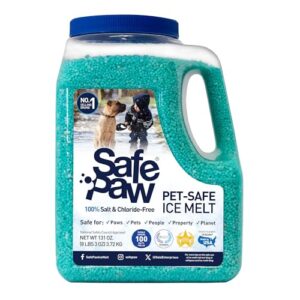
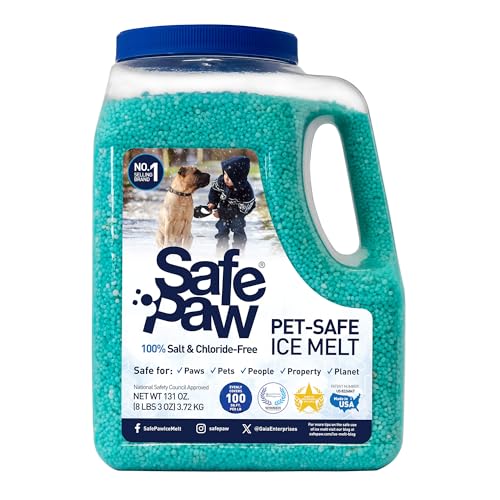
Safe Paw Pet-Safe Snow and Ice Melt, Salt- and Chloride-Free Melter, 8 lbs
Best for: Front steps and short walks where you want a chloride-free melt and can store the jug sealed
- Chemistry (Creators listing)
- Salt-free and chloride-free formula
- Effective temp (listing)
- Marketed down to about −2°F
- Surface note (listing)
- Non-corrosive positioning for cured concrete, brick, wood decks when used as directed
- Size
- 8 lb jug
Safe Paw 8 lb () is the Creators-verified chloride-free starter jug we point to when a cat household wants something kinder than rock salt on their steps. Listing language emphasizes salt-free / chloride-free chemistry, low-temp melt claims around −2°F, and non-corrosive positioning on cured surfaces.
Use label rates—more is not better for pets, plants, or concrete. Keep the jug sealed and elevated. After any outdoor time on treated surfaces (yours or the city’s), wipe paws before your cat starts a grooming session.
Pros
- Avoids NaCl / CaCl₂ / MgCl₂ chloride sting that rock salt and many melts share
- Concentrated spread marketing (use less than rock salt) fits small cat-home walks
- Creators-verified image and title for affiliate honesty
- Pairs cleanly with a paw-wipe habit
Cons
- Not a free pass to leave the jug open where cats can dig in
- City sidewalks treated with rock salt still need paw care
- Melting performance in deep ice may trail aggressive CaCl₂ blends
- “Pet-safe” marketing ≠ zero GI risk if a large amount is eaten
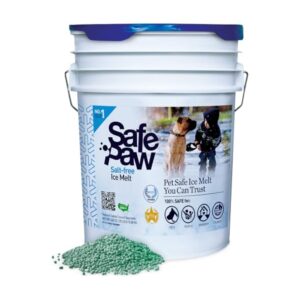
Safe Paw Pet-Safe Ice Melt, Salt & Chloride-Free Deicer, 35 Lbs
Best for: Longer driveways/sidewalks where an 8 lb jug runs out mid-storm
- Chemistry (Creators listing)
- Salt- & chloride-free with traction agent called out
- Effective temp (listing)
- Marketed as low as about −15°F on this SKU’s copy
- Size
- 35 lb
Safe Paw 35 lb () is the larger Creators-verified sibling when an 8 lb jug is not enough coverage. Listing copy still stresses salt- and chloride-free chemistry plus a traction agent—useful when you need grip as well as melt.
Store the bag like any chemical: sealed, dry, and out of reach. Do not leave open bags in a garage cats patrol.
Pros
- Bulk size reduces mid-winter switches back to rock salt
- Traction-agent marketing helps when melt alone is not enough grip
- Same chloride-free category logic as the 8 lb jug
Cons
- Heavier bag is a tipping/storage hazard if left where cats play
- Listing temp claims can differ by SKU—read the bag you receive
- Still wipe paws; HOA salt elsewhere remains a risk
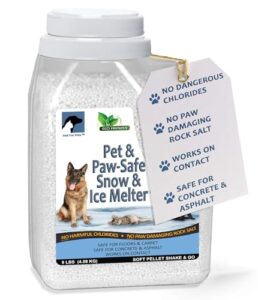
JUST FOR PETS Snow & Ice Melter Pet Safe Ice Melt — 9 lb Shaker Jug
Best for: Shoppers who want a shaker jug that markets zero classic chloride salts
- Chemistry (Creators listing)
- No NaCl, CaCl₂, or MgCl₂; salt-free positioning
- Form
- 9 lb shaker jug
JUST FOR PETS 9 lb () markets a salt-free melt with explicit “no magnesium / calcium / sodium chloride” language and a no-sharp-rock-salt pitch aimed at paw comfort.
We treat it as a credible alternate in the chloride-free lane—not as edible litter. Same rules: label rates, sealed storage, paw wipe on return.
Pros
- Explicit chloride exclusions on the listing—easy to compare to rock salt bags
- Shaker format for controlled spread on steps
- Useful backup brand in the same pet-safer lane
Cons
- Brand recognition is thinner than Safe Paw / Morton
- Still can upset a stomach if a cat eats pellets
- Confirm the carton in hand matches chloride-free claims
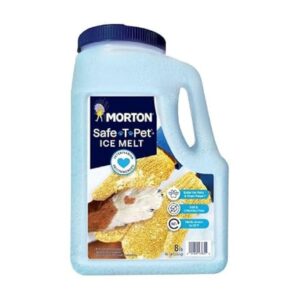
Morton Safe-T-Pet Ice Melt, 8 lb Container
Best for: People who want a Morton-labeled pet-care melt instead of rock salt
- Chemistry (Creators / brand)
- Salt- and chloride-free (pet-care melt; urea-class pet-friendly products are common in this lane)
- Effective temp (listing)
- Melts down to about 10°F
- Positioning
- Developed with veterinarians vs plain salt (brand claim)
- Size
- 8 lb container
Morton Safe-T-Pet 8 lb () is Creators-verified as a salt- and chloride-free Morton pet-care melt, marketed as developed with veterinarians and effective to about 10°F.
ASPCA-class writing often groups urea-based products among those labeled pet-friendlier; that still does not mean unlimited licking. Use it as a relative upgrade from rock salt on surfaces you control.
Pros
- Familiar Morton branding with explicit salt/chloride-free claims
- Veterinarian-developed positioning vs plain rock salt
- 8 lb size matches typical front-walk jobs
Cons
- Melts only to ~10°F—may underperform deep-freeze CaCl₂ blends
- ASPCApro still prefers caution with any “pet-friendly” melt if pets lick paws
- Availability/SKU naming can vary by retailer—match the Safe-T-Pet label
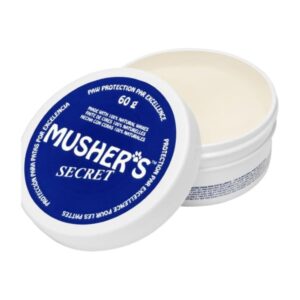
Musher’s Secret All-Natural Dog Paw Balm, All-Season Paw Protector, 60 g
Best for: Cats or multi-pet homes that will tolerate a thin wax layer before brief outdoor time
- Type
- All-season paw protection wax/balm
- Size
- 60 g
- Listing note
- Food-safe oils/waxes; originally sled-dog formula; brand says safe for other animals
Musher’s Secret 60 g () is a Creators-verified paw wax that builds a thin barrier against ice, salt, and melt residue. Brand copy traces it to sled-dog use and notes suitability for other animals.
ASPCApro suggests paw wax or booties for sensitive pads—and warns that some pets lick wax off. For cats, trial a tiny amount; if grooming spikes, wash it off and lean on wipe-downs or our cat booties / Soft Claws guide instead of forcing gear they hate.
Pros
- Creates a physical barrier against salt crystals and melt residue
- Widely available Creators-verified SKU
- Useful even when the city salted the sidewalk you cannot control
Cons
- Many cats hate anything on their feet—skip if it causes frantic licking
- ASPCApro: some pets find wax tasty; GI upset possible if they over-lick
- Wax is not a substitute for wiping paws or securing melt bags
- Dog-marketed; introduce carefully for cats
Buying framework: pick chemistry, then size, then storage
Start with the ingredient story (chloride-free / urea-forward vs CaCl₂ rock-salt blends), then pick a jug size you will actually finish in one season, then plan sealed storage away from litter robots and food bowls. If your HOA or city salts the public sidewalk, your bag choice only solves half the problem—paw hygiene is the other half.
What we like about a chemistry-first approach
- Separates rock salt NaCl from CaCl₂ / MgCl₂ / urea / chloride-free blends
- Keeps antifreeze (ethylene glycol) in its own lethal category
- Gives shoppers Creators-verified relative-safer melts without fabricated boarding-trial claims
- Pairs products with wipe / wax / booties soft-links
Honest limits
- Cannot control municipal salt on public walks
- “Pet-safe” remains unregulated marketing language
- Cats may refuse booties and over-lick wax
- Large open-bag ingestions still overwhelm any brand claim
Rock salt vs ice melt for cats — FAQ
Is rock salt safer than ice melt for cats?
Not automatically. Rock salt is usually sodium chloride—irritating to pads and risky in large ingestions (hypernatremia). Bags labeled “ice melt” may be CaCl₂ (more irritating), MgCl₂/KCl, urea, or chloride-free blends. Read the chemistry, then rank relative risk; do not assume the word “melt” means gentler.
What chemicals are in common ice melts?
Poison.org and ASPCA-class sources list sodium chloride (rock salt), calcium chloride, potassium chloride, magnesium chloride, and urea (carbonyl diamide). Traction-only options include sand, gravel, or plain kitty litter—those do not melt ice but improve grip.
Is “pet-safe” ice melt actually safe if licked?
Safer is not the same as snack-safe. ASPCA notes there are no specific requirements for labeling a deicer “pet safe.” Pet-friendly products often use urea or magnesium chloride and can still cause stomach upset. ASPCApro: a couple of paw licks are often self-limiting; eating from an open bag is the bigger emergency.
Calcium chloride vs magnesium chloride — which worries poison lines more?
Pet Poison Helpline calls calcium salts the most severe irritants among common melt ingredients (dermal + GI). ASPCApro adds that large calcium chloride ingestions may ulcerate mouth/stomach. Magnesium chloride is often in pet-friendly marketing but still irritates and can contribute to electrolyte problems in large ingestions—especially with kidney disease.
Is ice melt the same as antifreeze?
No—and mixing them up is dangerous. Ice melts are salt/urea-type deicers. Automotive antifreeze is typically ethylene glycol, which Pet Poison Helpline and Merck-class sources treat as a rapidly fatal kidney poison in tiny amounts for cats. Store antifreeze separately, clean spills immediately, and never use radiator fluid as a sidewalk melt.
What should I do if my cat walks through treated ice?
Wipe or rinse and dry paws (and any belly fur that dragged through slush) before grooming. Minimize licking until pads are clean. Check for redness, limping, or cracked pads. If your cat ate slush or shows drooling, vomiting, lethargy, tremors, or seizures, call your veterinarian or a pet poison hotline with the product label.
What are signs of a serious ice-melt ingestion?
Beyond mild, brief GI upset: persistent vomiting/diarrhea, dehydration, oral pain or ulcers (especially with calcium chloride), neurologic signs such as tremors or seizures (hypernatremia risk with large salt loads). ASPCApro advises clinic care for more than a casual lick with more than mild vomiting, or any neurologic signs. Do not give activated charcoal for salt toxicosis unless a veterinarian directs it—charcoal itself can worsen hypernatremia.
What are safer alternatives to chemical melts?
Sand, gravel, or unused clumping litter for traction; heated mats where practical; shovel early so you need less chemical. For melts you do buy, prefer chloride-free / urea-forward pet-marketed products on surfaces you control—and still wipe paws.
Do cats need booties or paw wax in winter?
Optional. ASPCA suggests wax or booties for irritated pads. Many cats refuse booties; if yours will wear them, see our cat booties & Soft Claws review. Wax like Musher’s Secret can help briefly—watch for over-licking.
We live in mild Orange County / Laguna Niguel winters—does this still matter?
Softly, yes. Coastal South Orange County rarely needs bags of melt, but travel, mountain day trips, refrigerated warehouse docks, and visiting family in snow country still expose paws. Keep a wipe habit and a small pet-safer melt only if you actually de-ice a walk.
When should I call ASPCA Animal Poison Control or Pet Poison Helpline?
After more than a casual lick, any neurologic signs, bloody vomit/diarrhea, or known bag-raiding—before waiting overnight. ASPCA APCC: (888) 426-4435. Pet Poison Helpline: (855) 764-7661. Fees may apply; bring the product label. For ethylene glycol antifreeze suspicion, go to emergency care immediately.
Did Cats Luv Us test these melts with boarding cats?
No. This guide is literature- and label-based (research_basis=literature). We do not invent boarding-hotel ice-melt trials. Product cards use Amazon Creators API data and may earn a commission via tag catsluvus03-20.
Bottom line
Rock salt is a known paw irritant and a hypernatremia risk in big ingestions. Ice melt might be gentler or harsher depending on whether the bag is calcium chloride, magnesium chloride, urea, or chloride-free. Prefer relative-safer chemistry on your own property, wipe paws every time, lock up bags, and treat antifreeze as a completely different emergency. No fabricated boarding-hotel product trials—just literature, labels, and honest affiliate picks.
Sources
- ASPCApro — Ice Melt Toxicity in Pets
- ASPCA — Keeping Pets Safe during Winter: The Dangers of Ice Melts
- ASPCA — Is It Safe to Use De-Icers Around Your Dog? (chemistry + “pet safe” labeling note)
- Pet Poison Helpline — Is there really a “safe” ice melt?
- Pet Poison Helpline — Antifreeze / ethylene glycol poisoning
- Poison.org — Pets, kids, and ice melt products
- Morton — Safe-T-Pet product page (salt/chloride-free claims)
- Amazon Creators API searchItems/getItems (2026-09-25 PT): , , , ,
Going away? Keep your cat's routine on track.
Cats Luv Us Boarding Hotel & Grooming in Laguna Niguel, Orange County.