How to Use Sisal Rope for Cat Trees (2026 DIY Repair Guide)
When posts fuzz out, replace the wrap—not the whole tree. We map Creators-verified sisal diameters and lengths for DIY repairs, then point to our rope-chooser guide for material theory.

In this review 12 sections
CatsLuvUs Copilot Search
Ask this review — not the open web
Answers are generated from this Cats Luv Us review only. We may earn a commission from Amazon links. Not veterinary advice.
Answer from this review
This score is editorial — based on labels, recall history, and veterinary guidance, not a lab test. How we evaluated.
Buy 1/4-inch natural sisal in a long spool; wrap tight with hot glue—skip dyed craft twine
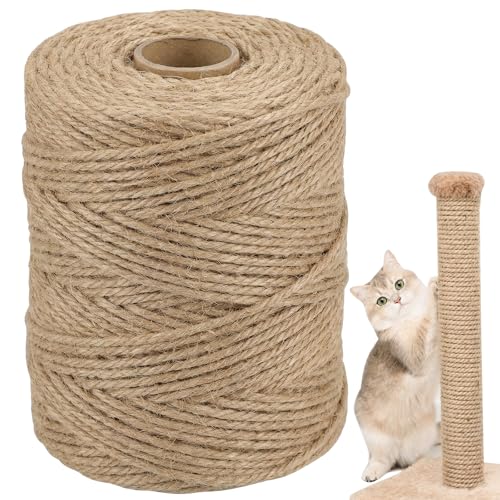
Default repair spool: 1/4″ × 164 ft natural sisal. Thinner wrap: 4 mm × 164 ft. Shorter post: 1/4″ × 50 ft. Complements our best-rope chooser (material theory)—this page is the wrap how-to.
Quick picks — sisal rope for DIY
DIY wrap vs buying new
If the plywood core and base still feel solid, re-wrapping with natural sisal is cheaper than a new tower. Cracked bases, wobbling bolts, or chewed support poles are safety issues—replace the tree. This guide sells ready-made sisal spools for wrapping; it is not a lumber DIY build.
For sisal vs jute vs carpet theory, use our Choosing the Right Rope page. Here we focus on diameter, length, and wrap technique from listing specs.
Measure before you buy
Rough length needed ≈ post circumference × wrap height ÷ rope diameter (same units). Add 20% for overlaps and mistakes. Example: a 4″ diameter post (circumference ≈ 12.5″) wrapped 24″ high with 0.25″ rope needs about 12.5 × 24 ÷ 0.25 ≈ 1,200 inches ≈ 100 ft—so a 50 ft spool may be short.
Prefer natural undyed sisal marketed for cat scratchers. Craft jute and colorful twine shred faster and may use dyes you do not want near mouths.
Wrap technique (labels + common practice)
- Strip loose old fiber; wipe dust.
- Anchor the start with a dab of hot glue or a staple at the base (staples into wood only—never into cardboard tubes that collapse).
- Wrap tightly upward with slight overlap; keep tension even.
- Glue every few turns on heavy clawers; finish with a glued/stapled end tucked under.
- Air out oil-treated rope outdoors first if the listing warns of scent.
Wear gloves. Keep rope away from open flame. Supervise the first sessions—some cats chew loose ends.
Diameter cheat sheet
4 mm: fine wrap for slim poles and furniture legs—more turns, wears sooner. 6 mm / 1/4″: the sweet spot for most condo columns. 8 mm / 5/16″: thick posts and hard clawers. If your old wrap was carpet, expect cats to need a day or two to accept sisal texture.
Match color to your tree only if aesthetics matter; cats care about grip. Light-colored rope shows dirt faster on multi-cat homes.
Glue, staples, and safety
Hot glue is the common DIY fix because it sets fast on wood. Apply thin beads under the rope—not puddles on the surface. Staples work on solid wood cores; they tear cardboard tubes. Never leave needle-sharp staple legs exposed.
Keep isopropyl cleanup rags, glue guns, and loose rope ends away from curious mouths. After wrapping, tug-test the finish end hard; if it unravels in your hand, it will unravel under claws.
Multi-cat wear patterns
Watch which face of the post shreds first—that is where to reinforce with extra glue passes. Rotate freestanding posts periodically so wear spreads. If one cat pees on the post, replace the rope entirely after cleaning; urine-soaked sisal is a hygiene problem, not a cosmetic one.
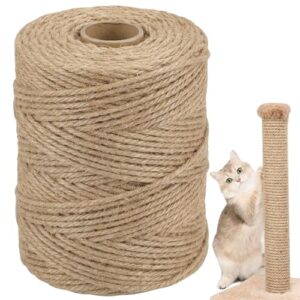
Natural Sisal Rope for Cat Scratcher, 1/4in x 164ft Twine for Cat Tree
Best for: Standard scratching posts and tower columns
- Diameter
- 1/4 in (6 mm)
- Length
- 164 ft
- Fiber
- Natural sisal
- Color
- Natural
The ondware 1/4″ × 164 ft spool () is the default for most DIY wraps. Listing notes natural vegetable-oil treatment—air out outdoors before wrapping if the scent is strong.
Pros
- Long spool
- Natural fiber
- Creators-verified
Cons
- May carry plant-oil scent
- Gloves recommended
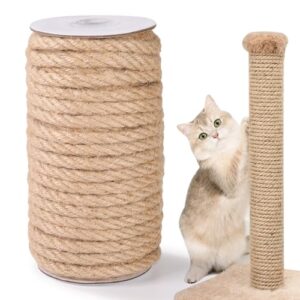
Natural Sisal Rope for Cat Scratcher Post, 5/16″ x 60 Ft Twine for Cat Tree
Best for: Large diameter posts and heavy clawers
- Diameter
- 5/16 in (8 mm)
- Length
- 60 ft
- Fiber
- Natural sisal
- Color
- Brown
5/16″ × 60 ft () for thicker columns. Estimate length = circumference × height ÷ rope thickness—buy a second spool if math says you are short.
Pros
- Thicker wear surface
- Natural fiber
- Creators-verified
Cons
- Shorter spool
- Harder to wrap tight on small poles
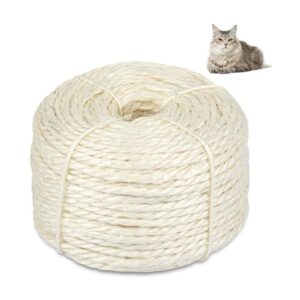
164 Ft Sisal Rope for Cat Tree, 1/6 Inch Natural Twine, White Color
Best for: Multiple small posts or furniture-leg wraps
- Diameter
- 4 mm / 1/6 in
- Length
- 164 ft / 50 m
- Fiber
- Natural sisal
- Color
- White/light
Pros
- Long run
- Fine wrap look
- Creators-verified
Cons
- Wears faster than 1/4"
- Keep away from flame (listing)
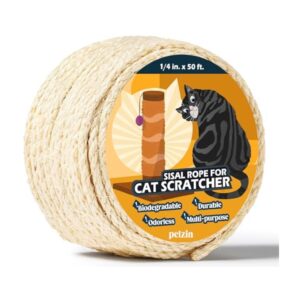
Natural Sisal Rope for Cat Scratcher and Scratching Post 1/4 Inch, 50 Feet
Best for: Single scratching post refresh
- Diameter
- 1/4 in
- Length
- 50 ft
- Fiber
- Natural sisal
- Use
- Scratcher repair
Pros
- Less leftover
- 1/4" diameter
- Creators-verified
Cons
- May need second spool for tall towers
When to stop DIY
Replace the whole tree if the center pole spins, the base tips under your weight, or platforms delaminate. Sisal refreshes texture; it does not fix structural failure.
Tools checklist
Have ready: sisal spool, low-temp glue gun + sticks, scissors, gloves, optional staple gun for wood cores, measuring tape. Work outdoors or on a drop cloth—fibers shed. Cut old wrap only after confirming you have enough replacement length. Photograph the post before stripping so you remember platform heights.
Furniture-leg wraps
The same spools protect sofa legs. Wrap from floor up 12–18 inches, glue lightly, and place a competing scratching post beside the furniture. If the cat still prefers upholstery, add sticky tape temporarily.
FAQ — sisal rope DIY
Is hot glue safe?
Use a low-temp glue gun on wood/cardboard posts; let it cool fully before cat access. Avoid glue blobs cats can chew off.
Sisal or jute?
Natural sisal generally outlasts jute for scratching. See our rope chooser for the material deep-dive.
Why does new rope smell?
Some spools are treated with plant oils. Air outdoors; if odor persists, try another brand.
Sources
- Amazon Creators API getItems (tag catsluvus03-20) — listing diameters/lengths
- Cats Luv Us — best rope for scratching posts
- ASPCA — general pet-safe home DIY caution (supervise adhesives)
- Engaging competitor DIY angle only (not copied)
Going away? Keep your cat's routine on track.
Cats Luv Us Boarding Hotel & Grooming in Laguna Niguel, Orange County.