Male vs Female Siberian Cat (2026): Size, Temperament & Fit
Siberian males and females share the same triple-coated forest type—but CFA standards explicitly allow for smaller females and jowlier males, and allergy research often finds higher Fel d 1 in intact males. We compare size, temperament tendencies, spay/neuter effects, grooming, and health screens using CFA/TICA and veterinary literature—not boarding litter trials.

In this review 12 sections
CatsLuvUs Copilot Search
Ask this review — not the open web
Answers are generated from this Cats Luv Us review only. We may earn a commission from Amazon links. Not veterinary advice.
Answer from this review
This score is editorial — based on labels, recall history, and veterinary guidance, not a lab test. How we evaluated.
Choose the individual kitten and cattery health paperwork first; use sex mainly for realistic size expectations (CFA: females generally smaller; males often heavier with fuller jowls) and allergy planning (intact males often produce more Fel d 1—still no hypoallergenic guarantee).
The Cats Luv Us Team reads male vs female Siberian as a size-and-hormone conversation more than a personality war. CFA’s standard states females are generally smaller than males, males develop fuller jowls, and the breed may take as long as five years to mature—with size secondary to type. Temperament literature paints the breed as sociable and devoted; sex stereotypes from blogs are tendencies, not contracts. For allergies, peer-reviewed Fel d 1 work and Cornell commentary point to higher average output in intact males, with huge individual overlap. Health screens (HCM echo; PKD DNA where relevant) apply to both sexes.
Optional gear for Siberian households (either sex)
How we compared male vs female Siberians (literature, not litter tests)
This is a breed sex-difference and care guide for people deciding between a male or female Siberian—or wondering whether online “males are cuddlier / females are lower allergen” claims hold up. The Cats Luv Us Team did not board-test litters for this article. We compared CFA and TICA breed literature, veterinary papers on Fel d 1 and gonadectomy, and responsible cattery screening language.
Related breed comparisons on Cats Luv Us (soft links only—no Engaging 301s): Ragdoll vs Norwegian Forest Cat, Thai vs Siamese, Chartreux vs Russian Blue, Dragon Li vs tabby, Bengal vs tabby, and Egyptian Mau vs tabby.
Siberian snapshot (both sexes)
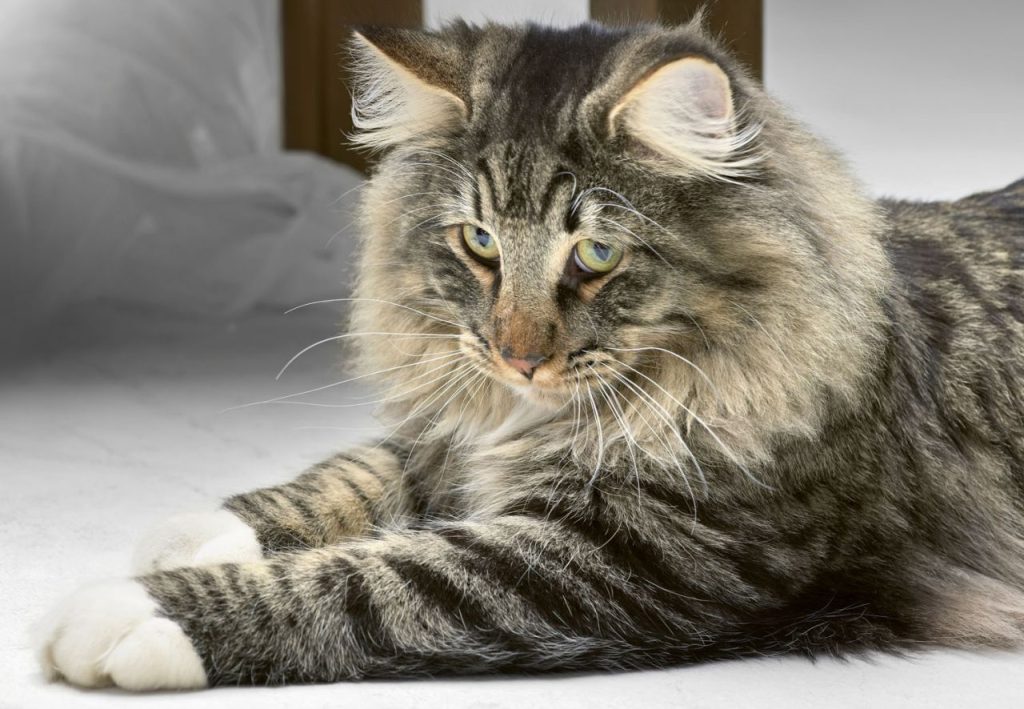
CFA presents the Siberian as Russia’s native forest cat, with recorded history around the year 1000, U.S. breeding imports beginning in 1990 (Elizabeth Terrell / Starpoint), CFA registration in 2000, and Championship status in 2007. The type is a medium to medium-large, strong triple-coated cat with a sweet expression and an overall impression of roundness and circles rather than the rectangles/triangles of some other forest breeds.
Personality language from CFA is breed-level: intelligent, sociable, curious, easygoing, often “dog-like” in devotion, generally quiet communicators who prefer purrs, mews, chirps, and trills. That is the shared canvas. Sex differences sit on top as size, secondary sex traits, hormones, and averages in allergen studies—not a second breed.
Size, build, and slow maturity
Popular CFA summaries place many mature males around 12–18 pounds and females around 8–12 pounds, with surprising heft for the visual size. Pet-media bands sometimes run higher; treat every number as a range, not a purchase contract. Neutered pets may carry more body fat than intact breeding cats—portion control still matters.
| Trait | Male tendency | Female tendency | Shared |
|---|---|---|---|
| Adult weight (CFA popular band) | Often ~12–18 lb | Often ~8–12 lb | Size secondary to type; slow mature |
| Head | Well-developed jowls when mature | More moderate look | Modified wedge, rounded muzzle |
| Coat | Same triple coat | Same triple coat | Thicker in cold months; shorter in summer |
| Maturity | May take up to ~5 years | May take up to ~5 years | Do not judge a 10-month kitten as “done” |
| Handling | Heavier lift for baths/nail trims | Often easier to wrangle by sheer mass | Train early; use towels + treats |
If you need a cat you can reliably lift into a carrier during a midnight ER visit, be honest about your strength and the male’s adult trajectory. That is practical planning—not sexism.
Temperament: breed first, sex second
Show standards require an unchallenging temperament. CFA owner stories emphasize cats that greet at the door, invent mischief in cabinets, play fetch, and sit on keyboards. None of that is coded “male only” or “female only” in the registry text.
Where sex talk gets loud is breeder anecdote: neutered males cast as broad social butterflies; females as selective about their favorite person; intact hormones amplifying spray, heat calling, and territorial drama. Those patterns show up across domestic cats, not just Siberians. A well-socialized female from a calm line can out-cuddle a neglected male—and the reverse.
Our editorial rule: pick the kitten whose play style and health paperwork fit your home. Use sex as a secondary filter for size and (if allergies matter) average Fel d 1 trends—not as a personality vending machine.
Allergies and Fel d 1: sex averages ≠ guarantees
There is no hypoallergenic cat in the medical sense. Fel d 1 drives most cat allergy symptoms. A 1996 Journal of Allergy and Clinical Immunology study (Jalil-Colome et al.) found higher Fel d 1 in skin washes from male cats than females. Cornell-linked commentary notes evidence that uncastrated males often make more Fel d 1 than females or neutered males. Purina Institute’s evidence summary agrees that sex can correlate—while stressing that an individual intact male can still under-produce a high-producing female.
Siberians are frequently marketed as “better for allergy homes.” Some individuals do produce less Fel d 1; small genetic studies explore Ch1/Ch2 variation. That is not a license to promise symptom-free living by buying a female Siberian sight-unseen. Visit, spend time, run your allergist’s plan, and treat sex as one weak prior—not a warranty.
Spay, neuter, and living with hormones
For almost all pet homes, altering is the responsible default. Stubbs et al. (JAVMA, 1996) compared kittens neutered at 7 weeks, at 7 months, and left intact: intact cats showed greater intraspecies aggression, less affection in that study’s measures, and more secondary sex characteristic development; early-age and traditional-age neutering looked similar on the study’s physical/behavioral endpoints.
- Intact males: higher risk of urine spraying, roaming motivation, and inter-male conflict—plus the Fel d 1 average bump noted above.
- Intact females: heat cycles, vocalizing, and pregnancy risk if any intact male access exists.
- Altered pets of either sex: watch calories; gonadectomy groups in research carried more falciform fat than intact controls.
Exact surgery timing belongs to your veterinarian and local shelter/rescue norms—not a viral challenge.
Grooming and daily care (same coat homework)
CFA’s grooming notes are sex-blind: coats vary enormously; feel the underside, tail, and britches several times per week; finger-separate mats, then comb. Seasonal coat blowouts are real. Males and females both need that plan; bulkier males may need a second human for towel wraps during nail trims.
Enrichment is shared too: tall perches for athletic jumpers, puzzle feeders for cabinet hackers, and washable beds for the shed season. Optional Amazon gear below is general pet equipment—not a sex-coded medical kit.
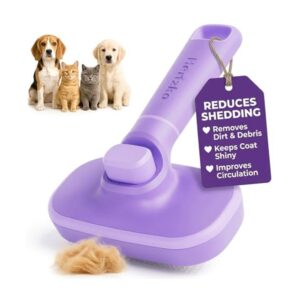
Hertzko Self Cleaning Slicker Brush for Dogs and Cats
Best for: Households managing spring/fall Siberian coat blowouts
- Style
- Self-cleaning slicker (retractable bristles)
- Creators brand
- Hertzko
- Use case
- Loose hair / light detangle on semi-long triple coats
Hertzko’s self-cleaning slicker () is here as a coat-maintenance tool, not a sex-specific gadget. CFA’s Siberian notes describe a dense, full triple coat that thickens in colder months and shortens in summer—the same structure for males and females. A light weekly slicker pass pulls loose hair before it coats the sofa; during spring blowouts, expect more frequent sessions.
Use light strokes. If you find mats in the britches, belly curls, or ruff, stop and switch to finger-separation plus a steel comb rather than ripping with the slicker.
Pros
- Push-button retract helps dump hair into the trash without picking bristles by hand
- Useful on both male and female Siberians—coat structure is not sex-specific in CFA standards
- Creators-verified image already in Media Library for honest affiliate linking
Cons
- Angled pins can scratch thin skin if you press hard—use light strokes
- Not a dematting rake for neglected knots; pair with a metal comb
- Grooming gear, not a medical or allergen-reduction product
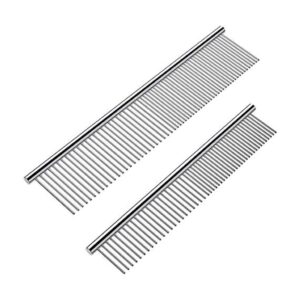
Cafhelp 2 Pack Dog Combs with Rounded Ends Stainless Steel Teeth
Best for: Owners who already brush but still find tangles in high-friction zones
- Style
- Stainless steel comb, rounded tips (2-pack)
- Creators brand
- Cafhelp
- Use case
- Finish pass after slicker; find hidden mats
Cafhelp’s rounded-end steel comb pair () matches CFA’s practical Siberian grooming advice: handle the underside, tail, and britches several times per week and feel for mats before they tighten. Sex does not change coat homework—male jowls and a fuller adult male frame can simply mean more cat to lift onto the grooming towel.
Pros
- Rounded tips are gentler than sharp dematting blades for routine checks
- Two-pack means one bathroom comb and one travel/backup
- Pairs cleanly with CFA’s advice to feel underside, tail, and britches several times per week
Cons
- Will not replace professional dematting if a coat is severely neglected
- Larger males can be harder to wrangle for rear-end work—patience and treats help
- Not an allergy or medical device
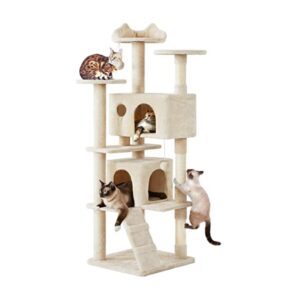
Yaheetech 70in Multi-Level Sturdy Cat Tree
Best for: Indoor Siberian households that need height and scratch posts in one footprint
- Height class
- ~70 in multi-level
- Creators brand
- Yaheetech
- Use case
- Vertical play + perch + sisal scratch
Yaheetech’s ~70-inch multi-level tree () is optional gear for an athletic indoor Siberian. Registry literature emphasizes strength, presence, and strong hindquarters—not a requirement to free-roam outdoors. Give vertical real estate, then supervise any leash walks separately.
Pros
- Height suits a powerfully built, high-jumping forest type
- Useful enrichment for both sexes; boredom is not a male-only problem
- Media already in library from prior breed-care reviews
Cons
- Confirm base stability on your floor type; large males need secure footing
- Not a substitute for interactive play sessions
- Assembly required; measure ceiling clearance
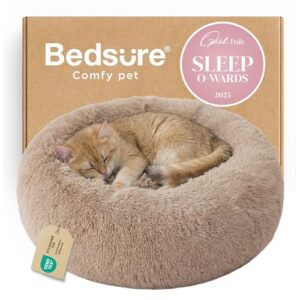
Bedsure Calming Cat Beds Donut Round Washable Kitten Bed, 20 inches Camel
Best for: Households that want a washable dedicated nap spot
- Size
- 20 in round donut (listing size)
- Creators brand
- Bedsure
- Use case
- Washable soft nest
Bedsure’s 20-inch calming donut () is a simple, washable soft landing. CFA’s Siberian temperament notes emphasize sociable cats that want to be near people—soft furniture they are allowed to use reduces conflict with the couch you prefer hair-free.
Pros
- Washable cover helps with seasonal shed hair piles
- Works for either sex; pick based on the cat’s preferred loaf shape, not stereotypes
- Reusable Media Library asset
Cons
- Very large males may overflow a 20-inch nest—watch fit as they mature to 3–5 years
- Some cats ignore beds and claim keyboards instead (CFA owners know this plot)
- Not orthopedic medical equipment
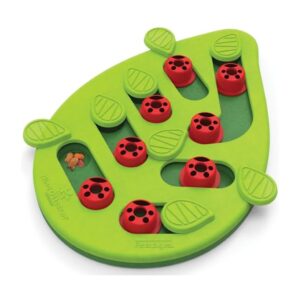
Catstages Nina Ottosson Buggin’ Out Puzzle & Play
Best for: Smart Sibs that invent trouble when under-stimulated
- Style
- Level-2 sliding treat puzzle
- Creators brand
- Catstages / Nina Ottosson
- Use case
- Solo enrichment between play sessions
Nina Ottosson Buggin’ Out () gives a curious Siberian a legal puzzle. CFA describes Sibs investigating cabinets and computer cursors; a treat puzzle is cheaper than replacing cables. Count the calories toward the daily ration—large, slow-maturing cats still gain fat if enrichment is all snacks.
Pros
- Matches “intelligent problem-solver” breed marketing with an actual toy, not a myth
- Useful for males and females alike
- Portion treats so puzzle calories do not silently fatten a slow-maturing large breed
Cons
- Some cats flip the whole board—supervise early sessions
- Not a substitute for human interactive play
- Choking risk if plastic breaks—inspect regularly
Who should lean male vs female?
| Your situation | Lean male? | Lean female? | Better question |
|---|---|---|---|
| Want maximum adult “lion” presence | Often yes (size/jowls) | Possible but usually smaller | Can you lift a 15–18 lb cat safely? |
| Mild cat allergy, still trying | Only if altered + verified low reaction | Sometimes preferred on averages | Did you test this cat for hours? |
| First-time owner, easy handling | Fine if socialized | Often easier by mass alone | Is the cattery socializing well? |
| Multi-cat home | Altered + slow intros | Altered + slow intros | Sex matters less than introductions |
| Want outdoor free-roam | No | No | Indoor + enrichment for either sex |
Health screens that ignore the pink/blue collar
CFA notes hypertrophic cardiomyopathy, polycystic kidney disease, and other recessive conditions as issues scrupulous breeders screen for. GCCF’s Siberian breeding policy emphasizes echocardiography for HCM (commonly discussed from about 10 months of age with repeats)—Maine Coon/Ragdoll HCM DNA panels are not automatically informative for Siberians. PKD has a DNA test pathway in Persian-related mutations; ultrasound still matters when clinical suspicion exists.
We will not invent prevalence percentages. We will say: budget for screening conversations and a long-term relationship with a feline-friendly veterinarian whether you bring home a boy or a girl.
If you travel and need trusted care in Orange County, Cats Luv Us Boarding Hotel & Grooming can help with boarding logistics—separate from this literature review’s verdict on sex differences.
What we like
- CFA-anchored size and jowl differences instead of internet weight folklore alone
- Fel d 1 sex literature cited with individual-variation caveats—no hypoallergenic guarantee
- Spay/neuter framed with veterinary gonadectomy research, not folklore only
- Shared triple-coat grooming honesty for both sexes
- Thin affiliate set matches grooming + vertical space + soft bed + enrichment
What we don't
- Individual cats vary more than male/female labels imply
- Affiliate ASINs are general pet products, not breed-medical or allergen devices
- Secondary lifespan/weight bands in pet media vary—treat CFA ranges as tendencies, not contracts
Male vs Female Siberian Cat — FAQ
Are male Siberians bigger than females?
Usually, yes as a tendency. CFA’s Siberian materials describe mature males commonly in a roughly 12–18 lb band and females roughly 8–12 lb, note that females are generally smaller, and allow for well-developed male jowls versus a more moderate female head. The standard also says the breed may take as long as five years to mature and that size is secondary to type—so judge the whole cat, not a bathroom scale warranty.
Do male and female Siberians have different personalities?
CFA and TICA describe the breed as intelligent, sociable, and people-oriented with an unchallenging show temperament—they do not publish a sex-split personality science paper. Breeder blogs often say neutered males are broadly social while females may bond selectively. Treat that as anecdote. Lineage, early socialization, and whether the cat is intact versus altered usually explain more of what you live with day to day.
Which is better for allergies—male or female Siberian?
Neither sex is a medical hypoallergenic product. Fel d 1 studies (including Jalil-Colome et al., 1996) and Cornell Feline Health Center commentary indicate intact males often produce more Fel d 1 than females or neutered males, but genetics and individual variation are large. Spend time with the specific kitten/adult, ask the cattery about allergen testing if offered, and talk with an allergist—do not buy on sex alone.
Should I get a male or female Siberian for an apartment?
Both sexes can live indoors successfully if you supply vertical space, play, and litter hygiene. The practical apartment difference is often adult bulk and lift-ability (larger males) plus noise/neighbor tolerance for active play—not a rule that females are “apartment cats” and males are not. Free-roam outdoors is a traffic/predator risk for either sex despite “forest cat” marketing.
Does neutering change male Siberian behavior?
Veterinary literature on domestic cats (e.g., Stubbs et al., JAVMA 1996) found sexually intact cats showed more intraspecies aggression, less affection toward people in that study design, and stronger secondary sex characteristics than neutered groups. Neutering is also central to preventing unwanted litters. Timing should be a conversation with your veterinarian—not a blog challenge.
Do male and female Siberians need different grooming?
No separate sex protocol. CFA describes a seasonal triple coat and recommends feeling the underside, tail, and britches for mats. Males and females share that coat job; a heavier adult male may simply take longer to comb.
What health screens matter regardless of sex?
Ask about HCM screening by echocardiography (Siberian-specific DNA tests for HCM are not the same as Maine Coon/Ragdoll mutation panels) and discuss PKD DNA/ultrasound where lineage warrants it. CFA notes breeders who invest in genetic and clinical screening. We do not invent incidence percentages.
How long until a Siberian is fully grown?
CFA frames Siberians as extremely slow to mature—taking as long as five years—with many cats approaching full size around three years in popular summaries. Budget food, furniture, and “will this still fit the carrier?” accordingly for both sexes.
Sources
- CFA — Siberian breed page (history; US import 1990; CFA registration 2000 / championship 2007; ♂ ~12–18 lb / ♀ ~8–12 lb; temperament; grooming; HCM/PKD notes): cfa.org/breed/siberian
- CFA — Siberian show standard (females generally smaller; male jowls; slow mature ≤5 years; temperament unchallenging; triple coat): cfa.org Siberian standard PDF
- CFA — Siberian breed presentation PDF (jowls vs moderate female look): cfa.org Siberian presentation PDF
- TICA — Siberian breed overview (medium-large; females considerably smaller; HCM check language): tica.org/breed/siberian
- Jalil-Colome J, et al. — Sex difference in Fel d 1 allergen production. J Allergy Clin Immunol. 1996;98(1):165-168: PubMed 8765830
- Cornell-related commentary (Kornreich / Feline Health Center context) — no hypoallergenic cat; intact males often more Fel d 1: Cornell alumni allergy note
- Purina Institute — Fact vs fiction: cat gender & allergen output (intact males generally higher Fel d 1; individual genetics dominate): purinainstitute.com
- Stubbs WP, et al. — Effects of prepubertal gonadectomy on physical and behavioral development in cats. J Am Vet Med Assoc. 1996;209(11):1864-1871: PubMed 8944799
- GCCF — A Breeding Policy for Siberian Cats (HCM echo screening language; PKD DNA notes): GCCF Siberian breeding policy PDF
- Amazon Creators API — product titles/images previously verified for ASINs , , , , (partner tag catsluvus03-20); Media Library reuse
Going away? Keep your cat's routine on track.
Cats Luv Us Boarding Hotel & Grooming in Laguna Niguel, Orange County.