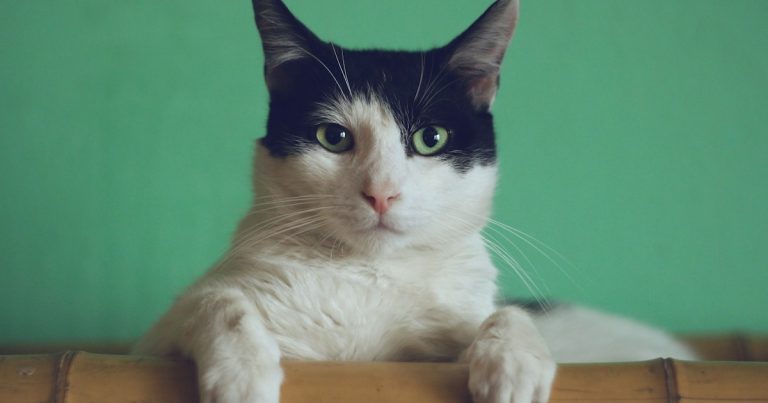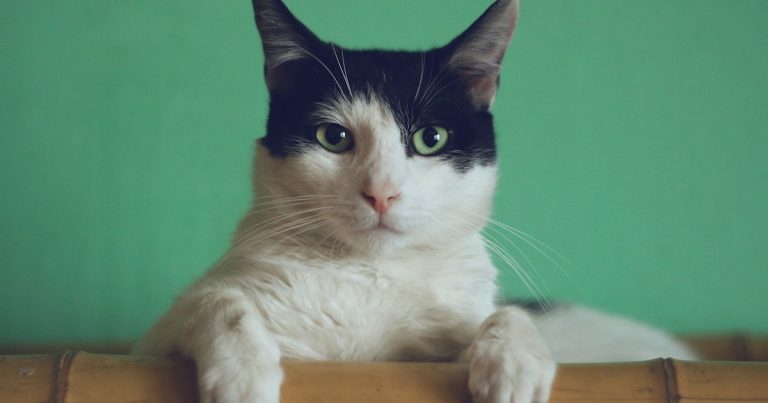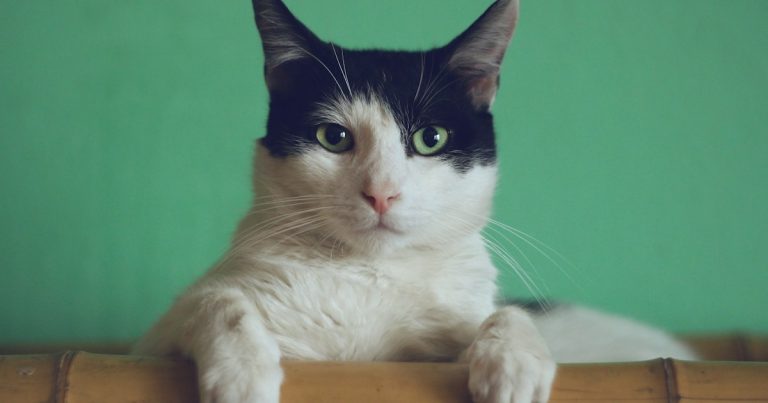
Ragdoll vs Norwegian Forest Cat (2026): Coat, Temperament & Fit
Both breeds are large and fluffy—but a Ragdoll and a Norwegian Forest Cat are not interchangeable. We compare US colorpoint origins vs Norwegian forest type, coat structure, temperament literature, grooming load, known HCM caveats, and indoor vs outdoor honesty using CFA/TICA sources—not boarding scorecards.

In this review 10 sections
CatsLuvUs Copilot Search
Ask this review — not the open web
Answers are generated from this Cats Luv Us review only. We may earn a commission from Amazon links. Not veterinary advice.
Answer from this review
This score is editorial — based on labels, recall history, and veterinary guidance, not a lab test. How we evaluated.
Pick the Ragdoll if you want a US-developed blue-eyed colorpoint companion that literature paints as calmly people-oriented; pick the Norwegian Forest Cat if you want a Scandinavian forest-type climber with a water-resistant double coat and more independent lap timing—both need grooming plans and vet-partnered heart screening conversations.
Short answer: the Ragdoll is a Riverside, California–developed pointed breed—blue oval eyes, silky semi-long coat with minimal undercoat, and a famously laid-back, people-oriented reputation. The Norwegian Forest Cat (skogkatt) is a Scandinavian landrace type—equilateral-triangle head, dense water-resistant double coat, and an athletic climber who often chooses when lap time starts and stops.
Shared fluff and large size do not make them the same cat. We do not invent genetic percentages or claim boarding side-by-side tests. Optional Creators-verified gear includes a Hertzko slicker, a stainless comb, and a tall cat tree.
Optional gear for fluffy large-breed households
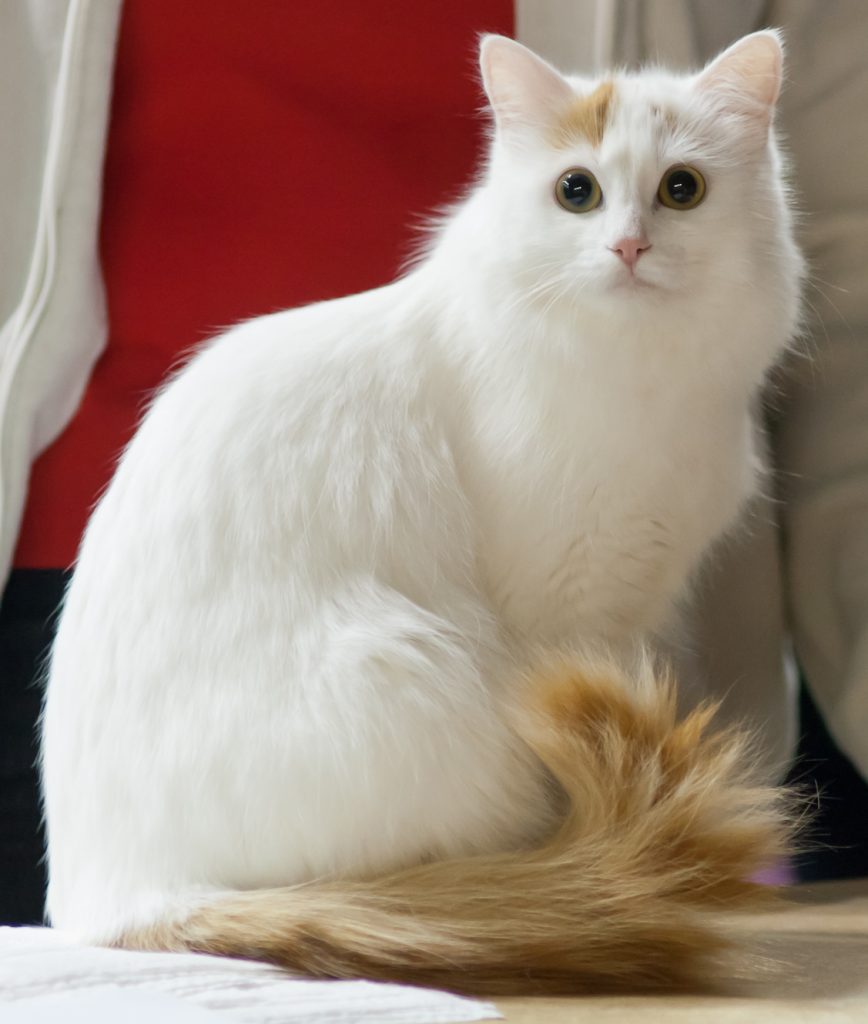
How we compared Ragdoll vs Norwegian Forest Cat (literature, not litter tests)
This is a breed comparison and care guide for people shopping large fluffy cats and wondering whether a blue-eyed Ragdoll and a Norwegian Forest Cat (Wegie / skogkatt) are interchangeable. The Cats Luv Us Team did not board Ragdolls and Norwegian Forest Cats side-by-side for a scorecard. We mapped CFA and TICA breed pages, published standards, and vet-facing cardiomyopathy literature, then translated that into household questions: origins, build, coat, temperament, grooming load, health caveats, and indoor lifestyle honesty.
Amazon cards below are optional gear verified through the Creators API and already in our Media Library (tag catsluvus03-20, rel="sponsored nofollow noopener").
Related breed-vs reading already live on Cats Luv Us: tortoiseshell vs calico patterns, Thai vs Siamese, Dragon Li vs tabby, Egyptian Mau vs tabby, and classic vs mackerel tabby types.
Origins: Riverside colorpoint vs Norwegian skogkatt
Ragdoll. CFA presents the Ragdoll as a breed developed in the 1960s by Ann Baker in Riverside, California, from selected domestic longhairs. The foundation story centers on Josephine, a white domestic longhair carrying the colorpoint gene; Baker selected for look and a notably placid temperament. The breed name tracks the (often oversold) “goes limp when held” anecdote. CFA accepted Ragdolls for registration in 1993 and advanced them to championship in 2000. In recent CFA registration statistics, Ragdolls have ranked among the world’s most popular pedigreed cats.
Norwegian Forest Cat. CFA and TICA materials place the breed with Norway’s forest and farm cats—the skogkatt—shaped by a harsh climate into a sturdy climber with a water-resistant double coat. Norse mythology and Viking-ship folklore are colorful backdrop, not a DNA certificate. After near-loss through outcrossing, organized breeding revived in Norway mid-20th century; CFA notes the first breeding pair reached the U.S. in 1979, with CFA championship status in 1993. King Olaf’s era made the breed a national emblem in popular telling.
What we will not do: invent “% Siamese” or “% Viking” DNA pie charts, claim either breed is a Maine Coon or Siberian by another name, or sell viral hypoallergenic guarantees. Registration pathway—not fluff alone—proves pedigree.
Size, coat, and color hallmarks
Both breeds mature slowly and finish large. The useful splits are eye color, color genetics rules, coat structure, and silhouette—not a fantasy weight warranty.
| Trait | Ragdoll | Norwegian Forest Cat |
|---|---|---|
| Origin story | U.S. pointed breed, Ann Baker / Riverside, 1960s | Norwegian skogkatt landrace; modern breeding revival mid-20th c. |
| CFA milestones | Registration 1993; championship 2000 | U.S. imports 1979; championship 1993 |
| Build tendency | Long rectangular body; heavy boning; broad chest | Solidly muscled; hind legs longer → higher rump; substantial bone |
| Head / eyes | Modified equilateral wedge; vivid blue ovals | Equilateral triangle; almond eyes; green/gold/copper (blue/odd with white) |
| Coat structure | Moderately long; abundant guard hairs; minimal woolly undercoat; silky | Distinguishing double coat; dense undercoat + long water-resistant guard hairs; seasonal bloom |
| Color framing | Pointed (colorpoint / mitted / bicolor / related overlays); always blue eyes | Wide color/pattern range; CFA excludes pointed Himalayan-style and several hybrid colors |
| Adult size (literature bands) | Males may reach or exceed ~20 lb class; females usually smaller; slow to ~4 years | Males often ~12–16 lb; females ~9–12 lb in CFA notes; full growth up to ~5 years |
| Coat care lean | Steel-comb ~1–2× weekly for many coats; fewer mats than heavy-undercoat breeds | Weekly comb typical; extra passes in spring molt; water-repellent coat baths dry slowly |
Treat published weight bands as tendencies. A petite Ragdoll female and a large NFC male can overlap on the scale—eye color, pointing, and coat structure still separate them on the judging table.
Temperament and household fit
Breed literature leans Ragdoll toward gently affectionate, calmly sociable, and people-oriented—CFA even notes owners who call them kittens that never quite grow up, plus trainability for fetch and recall. Norwegian Forest Cats are cast as intelligent, independent, and alert: friendly without being clingy, willing to help with whatever you are doing until they remember a more important solo project. CFA is blunt that lap time is usually their decision.
Patterns that show up again and again in reputable explainers:
- People time: Ragdolls more often stay close and sleep with owners; NFCs stay nearby but reserve the right to hop off.
- Voice: Ragdolls trend quieter soft mews; NFCs may chirp or trill when excited.
- Play / climbing: Ragdolls are moderately active; NFCs more often invent vertical parkour—budget a tall tree, not only a sofa arm.
- Kids & pets: both can share homes with respectful children and cat-friendly dogs when introductions are calm—Ragdolls’ trusting nature means supervise introductions so other pets are not the bullies.
- Alone time: neither thrives as a ignored outdoor ornament; NFCs will seek company if left alone too long, per CFA.
None of that licenses “always flop-lap Ragdoll” sales talk or “aloof forest statue” fearmongering. Interview the breeder about this kitten’s parents, early handling, and return policy.
Grooming, activity, and daily care
Care math for these large fluffies is mostly coat + vertical brain + portion control:
- Comb / brush: Ragdoll silk benefits from regular steel-comb sessions; NFC double coats need consistent combing with spring molt spikes. Creators-verified examples: Hertzko slicker and Cafhelp stainless combs.
- Vertical space: especially non-negotiable for NFCs—CFA warns kitchen cabinets become default perches without better options. A ~70-inch class tower (Yaheetech example) is a start.
- Soft beds: optional curl cups for indoor companions—Bedsure 20-inch donut.
- Enrichment: puzzle feeders and wand play (Nina Ottosson Buggin’ Out)—and watch Ragdoll portions; CFA flags food motivation and obesity risk.
- Baths: optional; NFC water-repellent coats take a long time to wet and longer to dry—ask your breeder before you invent a salon routine.
- Veterinary partnership: ordinary feline wellness plus line-specific screening your breeder recommends (HCM conversations on both sides; GSD IV DNA testing in NFC lines where relevant). We will not invent breed disease percentages.
- Diet: complete feline diet appropriate to life stage per your veterinarian.
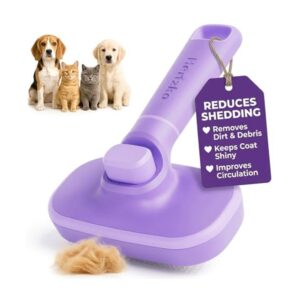
Hertzko Self Cleaning Slicker Brush for Dogs and Cats
Best for: Households managing spring/fall Siberian coat blowouts
- Style
- Self-cleaning slicker (retractable bristles)
- Creators brand
- Hertzko
- Use case
- Loose hair / light detangle on semi-long triple coats
Hertzko’s self-cleaning slicker () is here as a coat-maintenance tool, not a breed-branded product. CFA’s Ragdoll notes emphasize regular steel-comb sessions with relatively little undercoat; CFA’s Norwegian Forest Cat notes emphasize a dense, water-resistant double coat that blooms in winter and sheds hard in spring. A light weekly slicker pass pulls loose hair before it coats the sofa.
Keep pressure light on silky Ragdoll flanks, and follow with a comb through the NFC ruff, britches, and armpits where seasonal undercoat mats first.
Pros
- Push-button retract helps dump hair into the trash without picking bristles by hand
- Useful on both male and female Siberians—coat structure is not sex-specific in CFA standards
- Creators-verified image already in Media Library for honest affiliate linking
Cons
- Angled pins can scratch thin skin if you press hard—use light strokes
- Not a dematting rake for neglected knots; pair with a metal comb
- Grooming gear, not a medical or allergen-reduction product
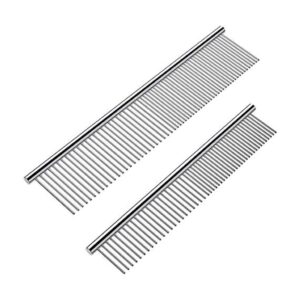
Cafhelp 2 Pack Dog Combs with Rounded Ends Stainless Steel Teeth
Best for: Owners who already brush but still find tangles in high-friction zones
- Style
- Stainless steel comb, rounded tips (2-pack)
- Creators brand
- Cafhelp
- Use case
- Finish pass after slicker; find hidden mats
Cafhelp’s 2-pack stainless comb set () is the finish tool after a slicker pass. CFA’s Ragdoll grooming copy leans toward steel-comb sessions once or twice weekly; CFA and TICA Norwegian Forest Cat care notes describe weekly combing for many coats, with extra passes in spring molt.
Use the finer spacing around the Ragdoll face and feathered britches; save deeper strokes for the NFC frontal ruff and winter undercoat. Affiliate honesty: this is ordinary pet grooming hardware, not a show-grooming system.
Pros
- Rounded tips are gentler than sharp dematting blades for routine checks
- Two-pack means one bathroom comb and one travel/backup
- Pairs cleanly with CFA’s advice to feel underside, tail, and britches several times per week
Cons
- Will not replace professional dematting if a coat is severely neglected
- Larger males can be harder to wrangle for rear-end work—patience and treats help
- Not an allergy or medical device
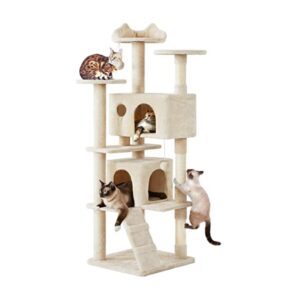
Yaheetech 70in Multi-Level Sturdy Cat Tree
Best for: Indoor Siberian households that need height and scratch posts in one footprint
- Height class
- ~70 in multi-level
- Creators brand
- Yaheetech
- Use case
- Vertical play + perch + sisal scratch
Yaheetech’s ~70-inch multi-level tree () is here as vertical territory, not as a breed product. CFA’s Norwegian Forest Cat page explicitly flags fondness for high places—kitchen cabinets included if you do not offer a better perch. Ragdolls are usually less parkour-obsessed, but large indoor cats still benefit from a survey platform.
Read the weight guidance on the carton before you assume it is for a heavy adult male. Bolt or wedge unstable trees, and pair furniture with daily wand play.
Pros
- Height suits a powerfully built, high-jumping forest type
- Useful enrichment for both sexes; boredom is not a male-only problem
- Media already in library from prior breed-care reviews
Cons
- Confirm base stability on your floor type; large males need secure footing
- Not a substitute for interactive play sessions
- Assembly required; measure ceiling clearance
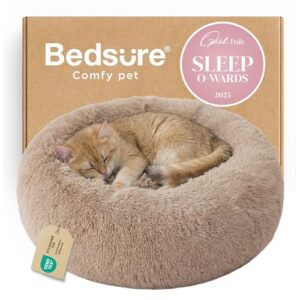
Bedsure Calming Cat Beds Donut Round Washable Kitten Bed, 20 inches Camel
Best for: Households that want a washable dedicated nap spot
- Size
- 20 in round donut (listing size)
- Creators brand
- Bedsure
- Use case
- Washable soft nest
Bedsure’s 20-inch calming donut () is optional comfort gear for large fluffy indoor companions. Place it near a window perch—or on a quiet sofa arm if your Ragdoll already claims your chest as primary real estate.
Wash on a pet-safe cycle when the coat blooms. A bed does not replace daily interaction or vertical space.
Pros
- Washable cover helps with seasonal shed hair piles
- Works for either sex; pick based on the cat’s preferred loaf shape, not stereotypes
- Reusable Media Library asset
Cons
- Very large males may overflow a 20-inch nest—watch fit as they mature to 3–5 years
- Some cats ignore beds and claim keyboards instead (CFA owners know this plot)
- Not orthopedic medical equipment
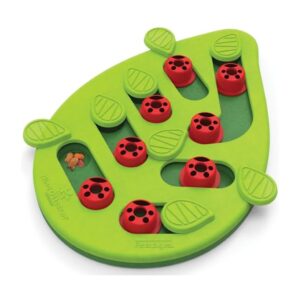
Catstages Nina Ottosson Buggin’ Out Puzzle & Play
Best for: Smart Sibs that invent trouble when under-stimulated
- Style
- Level-2 sliding treat puzzle
- Creators brand
- Catstages / Nina Ottosson
- Use case
- Solo enrichment between play sessions
Nina Ottosson Buggin’ Out () is a Level-2 cat puzzle feeder under the Catstages line. CFA flags Ragdolls as food lovers who may edge toward obesity without portion discipline; NFCs are cast as clever hunters who invent entertainment. A quarter-cup puzzle is cheap insurance against boredom shredding—and against free-feeding that pads the waistline.
Use it in rotation with wand play and climbing circuits.
Pros
- Matches “intelligent problem-solver” breed marketing with an actual toy, not a myth
- Useful for males and females alike
- Portion treats so puzzle calories do not silently fatten a slow-maturing large breed
Cons
- Some cats flip the whole board—supervise early sessions
- Not a substitute for human interactive play
- Choking risk if plastic breaks—inspect regularly
Who should choose which
| Profile | Lean Ragdoll? | Lean Norwegian Forest Cat? | Consider another breed? |
|---|---|---|---|
| Wants blue-eyed colorpoint look | Usually yes | No (CFA excludes pointed Himalayan-style) | — |
| Wants many coat colors / tabby & white forest look | No (pointed framework) | Usually yes | — |
| Prioritizes calmly people-oriented companion | Often a strong match | Possible, but more independent on average | — |
| Wants an athletic climber / vertical roommate | Moderate activity only | Usually yes—budget tall trees | — |
| Will comb weekly; can surge in spring shed | Yes | Yes (plan molt weeks) | — |
| Will not comb a semi-long coat at all | Risky | Riskier (denser undercoat) | Yes until the plan is real |
| Plans unsupervised free-roam outdoors | Wrong aisle (trusting) | Still wrong aisle (cars/predators) | Secure indoor / catio first |
| Expecting guaranteed hypoallergenic fluff | Wrong aisle | Wrong aisle | Talk to an allergist; no breed is a warranty |
Bottom line: choose Ragdoll for the U.S. pointed blue-eyed companion with silky, lower-undercoat fluff and a people-oriented reputation. Choose Norwegian Forest Cat for the Scandinavian forest-type climber with a water-resistant double coat and more independent timing. Both are specialist large companions compared with a random-bred shorthair—budget for grooming tools, vertical space, and veterinary screening conversations, not only the purchase price.
Cost, lifespan, health, and indoor lifestyle honesty
Purchase prices swing by cattery reputation, pattern/color demand, sex, and region. We will not invent dollar figures that go stale by next season—ask multiple CFA- or TICA-oriented breeders for current ranges and what is included (registration, spay/neuter contracts, vaccines, transport).
Health (vet-first, no invented %): CFA notes hypertrophic cardiomyopathy in Ragdolls and that many breeders routinely DNA-test as they work to reduce carriers; mealtime motivation also means watch weight. Norwegian Forest Cat materials likewise discuss cardiomyopathy (echo screening is emphasized because a breed-specific DNA test is not the main tool), and glycogen storage disease type IV appears in breed-health writing with an available DNA test in relevant lines. EveryCat’s summary of peer-reviewed NFC cardiomyopathy research is a useful starting point for questions—not a diagnosis. Ask breeders what they test, how often, and what certificates you receive; then partner with your veterinarian.
Indoor vs outdoor: Ragdolls’ trusting, people-oriented temperament is a poor match for free-roam suburban streets. Norwegian Forest Cats’ “survived Scandinavian winters” story is about coat and type history—not immunity to cars, coyotes, rodenticides, or infectious disease. Prefer secure indoor living, optional harness training, or a catio. Hardiness is not a free-roam warranty.
Pet-media lifespan bands often land roughly mid-teens for both breeds with solid care; those are not warranties. “Hypoallergenic fluffy cat” marketing is a red flag—individual allergen load varies.
What we like
- Clear origin and type split: US pointed Ragdoll vs Norwegian skogkatt—no invented DNA pie charts
- Coat, eye, and build hallmarks anchored to CFA breed pages and standards
- HCM caveats framed vet-first for both breeds without invented incidence rates
- Indoor vs outdoor lifestyle honesty instead of “hardy forest cat can free-roam” marketing
- Thin affiliate set matches grooming + vertical space + soft bed + enrichment
What we don't
- Individual cats vary more than breed labels imply
- Affiliate ASINs are general pet products, not breed-medical devices
- Secondary lifespan/weight bands in pet media vary—treat as ranges, not contracts
Ragdoll vs Norwegian Forest Cat — FAQ
What is the main difference between a Ragdoll and a Norwegian Forest Cat?
Type and history. The Ragdoll is a mid-20th-century U.S. pointed breed (Ann Baker, Riverside) with vivid blue eyes and a silky semi-long coat that should not carry a heavy woolly undercoat. The Norwegian Forest Cat is a Scandinavian forest/farm landrace type with an equilateral-triangle head, many allowable colors (pointed Himalayan-style patterning is a disqualification in CFA), and a dense water-resistant double coat. Temperament lean: Ragdolls more often sold as calmly people-oriented; NFCs more often independent climbers who choose lap timing.
Are Ragdolls and Norwegian Forest Cats the same breed?
No. CFA and TICA treat them as separate breeds with different standards, color rules, and origin stories. Shared large size and fluff do not make them interchangeable—registration and type matter.
Which breed has blue eyes and colorpoints?
Ragdolls are blue-eyed pointed cats (colorpoint, mitted, bicolor, and related white-overlay patterns in CFA). Norwegian Forest Cats may have green, gold, green-gold, or copper eyes (blue or odd eyes allowed with white); CFA disallows pointed Himalayan-style markings and several hybrid colors. If a seller markets a “pointed Wegie,” ask hard questions about registration pathway.
Which coat is easier to groom?
Neither is a Persian-level daily project for every individual, but the loads differ. CFA frames Ragdoll coats as relatively low-mat with minimal undercoat—steel-comb once or twice weekly for many cats. NFC coats are denser double coats that are often tangle-resistant yet demand extra combing in spring molt. Plan tools either way: a slicker plus a stainless comb is a practical starter kit.
Which breed is more of a lap cat vs independent climber?
Literature and CFA copy lean Ragdoll toward calmly affectionate, people-oriented companions who often stay close. Norwegian Forest Cats are frequently described as friendly but independent—lap time on their schedule—and as climbers who need tall perches. Meet the parents; socialization still wins.
Do both breeds have hypertrophic cardiomyopathy (HCM) concerns?
HCM appears in breed-care conversations for both. CFA notes HCM in Ragdolls and that many breeders DNA-test as part of reducing carriers; NFC materials emphasize echocardiography because a breed-specific DNA test is not the primary screening tool, and GSD IV DNA testing is a separate conversation. Ask breeders what they test, how often, and what paperwork you receive—then partner with your veterinarian. We will not invent incidence percentages.
Should a Ragdoll or Norwegian Forest Cat live outdoors free-roam?
We recommend secure indoor living (with optional supervised harness walks or a catio) for both. Ragdolls’ trusting nature is a poor match for traffic and predators. NFC “hardy forest cat” marketing does not cancel cars, coyotes, toxins, or infectious disease. Hardiness is about coat and type history—not a free-roam warranty.
Which breed is better for apartments, kids, or multi-pet homes?
Both can thrive in apartments when litter logistics, vertical space, and enrichment are real. Ragdolls often get the easier “calm with kids and other pets” marketing; NFCs can share homes with respectful children and cat-friendly dogs when introductions are calm—and when climbing outlets exist. Supervision still matters for either.
Sources
- CFA — Ragdoll breed page (Ann Baker / Riverside 1960s; registration 1993; championship 2000; coat, temperament, HCM, obesity notes): cfa.org/breed/ragdoll
- CFA — Ragdoll show standard PDF (pointed blue-eyed type; minimal woolly undercoat): cfa.org Ragdoll standard PDF
- CFA — Norwegian Forest Cat breed page (skogkatt; US import 1979; championship 1993; double coat; climbing; HCM/GSD notes): cfa.org/breed/norwegian-forest-cat
- CFA — Norwegian Forest Cat show standard PDF (equilateral triangle head; water-resistant double coat; color exclusions): cfa.org NFC standard PDF
- TICA — Norwegian Forest breed overview (coat, temperament, HCM echo screening language): tica.org/breed/norwegian-forest
- TICA — Ragdoll breed overview (pointed patterns; temperament; coat care): tica.org/breed/ragdoll
- EveryCat Health Foundation — Cardiomyopathy in Norwegian Forest Cats (summary of Maerz et al., JFMS): everycat.org NFC cardiomyopathy
- Amazon Creators API — product titles/images previously verified for ASINs , , , , (partner tag catsluvus03-20); Media Library reuse
Going away? Keep your cat's routine on track.
Cats Luv Us Boarding Hotel & Grooming in Laguna Niguel, Orange County.